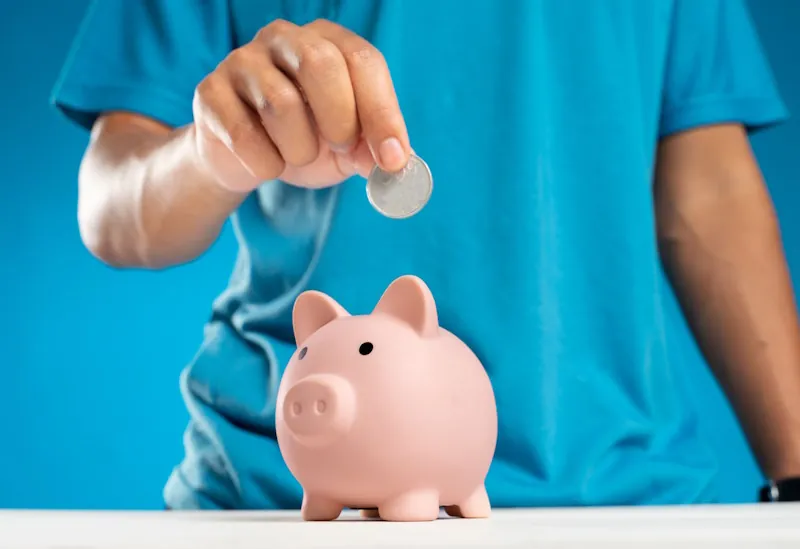
The phrase “treat yourself” has become so woven into everyday language that it barely registers as a financial decision at all. The midweek coffee upgrade. The skincare product you have been eyeing. The takeaway that felt like a reward after a rough day. The payday splurge that happens most months with a vague sense of justification but no real plan behind it. Each of these feels small and harmless on its own, and individually it usually is. Added together across a full year, the total is almost always far higher than people expect.
Working that total out from memory is close to impossible, because treat spending happens in small amounts spread across many categories at once: snacks, coffees, beauty, clothing, takeaways, tech, treat meals, and wellness, plus a payday spike that behaves differently from the rest of the month. Most people have a rough sense that they spend “a bit too much” on treats without ever putting a real number on it.
That is what this calculator is for. You put in your treat categories, your typical spend and how often you buy each item, your payday behaviour, and the budget you actually intend to stick to, and it works out what treating yourself is genuinely costing you each year, and whether that figure matches what you meant to spend.
Who Is This Calculator For?
- Anyone who treats themselves regularly but has never worked out what it adds up to across the year, across every category where it happens, snacks, coffees, beauty, clothing, takeaways, tech, and treat meals out
- Anyone whose spending pattern changes noticeably in the days after payday, and who has a rough sense that period is expensive but has never put an exact figure on it
- Anyone who buys treats on impulse and sometimes regrets them afterwards, the calculator shows how much the regret and failed return pattern is adding to the real annual cost
- Anyone who has set themselves an informal treat budget but has no clear idea whether they are actually sticking to it, the budget comparison section is built specifically for this
- Anyone who uses treats to manage stress, mark an achievement, or lift a low mood and wants to know whether the role treats play is costing more than expected
- Anyone influenced by TikTok Shop, Instagram, or other social shopping content who wants to see what that channel specifically is adding to their annual treat spend
Who Is This Calculator Not Suitable For?
- Anyone experiencing compulsive spending. This calculator covers common treat-yourself patterns rather than clinical compulsive buying. If spending feels out of your control, causes real distress, or is affecting your finances or relationships, speaking to a GP or therapist is the right next step rather than a spending calculator.
- Anyone looking for a precise transaction audit. The calculator works from your estimates of how often each treat happens and what you typically spend on it. It produces a realistic annual figure based on your inputs rather than pulling data from your bank account.
How to Use the Treat Yourself Spending Calculator
Start with the three sliders in the profile section. The treat severity slider sets how strong your urge to treat yourself is, from mild to constant, and shapes the multiplier applied to your impulse purchases. The annual budget slider is what you actually intend to spend on treats across the year. The exceed slider captures how reliably you go over that budget once you have one, and this is applied only to the overspend figure.
Work through the treat categories next. Toggle on every type that applies: snacks, coffees, takeaways, beauty, clothing, tech, hobby items, digital purchases, treat meals out, and wellness. For each one, enter your typical spend per occasion, how often it happens across the year, what share you buy on impulse, and what share you later regret. The return success rate matters here, snacks, coffees, and digital purchases cannot be returned at all, so any regret in those categories is pure loss.
Fill in the payday behaviour section honestly. The extra amount spent in the days after payday, above your normal treat habits, is multiplied by twelve and shown as its own line in the results.
In the digital influence section, rate how much TikTok, Instagram, YouTube, Amazon browsing, late-night scrolling, and sale notifications each push you toward treats. These feed into your overall score rather than the spending total directly.
Answer the five behavioural questions covering stress, reward habits, boredom, guilt, and whether you actually track your treat spending day to day. Toggle on Buy Now Pay Later if it applies to how you shop, then use the coverage or reduction sliders to see what a lower-spend version of your habits would look like.
Set your treat severity level, toggle on your treat categories, and answer the payday and digital influence questions. The calculator shows what your treats are actually costing per year: and how far you are from your own budget.
Your Treat Profile
Your Treat Categories
Toggle on every treat type that applies. For each, set what you typically spend and how often. Be honest about what percentage you buy impulsively and what percentage you later regret.
Payday Behaviour
Payday spending is one of the most consistent and least examined patterns in personal finance. How much does it affect your treat spending?
Digital Influence on Treat Spending
How much do these platforms or habits push you towards treats?
How and When You Treat Yourself
Do you use Buy Now Pay Later for treat purchases?
Klarna, Clearpay, Laybuy etcToggle on at least one treat category above to see your annual total.
What Is “Treat Yourself” Culture and Where Did It Come From?
The phrase “treat yourself” entered popular culture as a celebration of self-care and earned reward. It carries a cultural warmth that “impulse buying” or “emotional spending” simply do not, which is exactly what makes it interesting financially. Calling something a treat gives it a kind of permission that a plain impulse purchase never gets.
There is a genuine case for treating yourself. Research on motivation and willpower from Stanford University found that small, deliberate rewards help sustain effort on difficult long-term goals. A modest treat after a hard week is not just indulgence, it is a reinforcement mechanism that supports continued effort. The issue is not the treat itself. It is the frequency, the impulse nature, and the total cost that most people never sit down and calculate.
“Treat yourself” became commercially powerful because it shifts the moral weight of a purchase from the buyer to a cultural norm. “I deserve this” is a complete justification that needs no further thought. Retailers, food brands, beauty companies, and delivery platforms have all built marketing around this framing because it works, converting hesitation into a purchase by borrowing the logic of an earned reward even when nothing was actually earned or planned.
Research from the University of Southern California found that self-gift purchases, items bought specifically as a reward, were more likely to be made on impulse and less likely to be judged on necessity or value than equivalent purchases made for practical reasons. The treat framing quietly lowers the scrutiny a purchase would otherwise get.
The Payday Spending Pattern: Why the First Week of the Month Is Always Expensive
The payday spending spike is one of the most consistent and least examined patterns in UK household finance. Most people know it happens. Very few have worked out what it costs across a year.
Research from Barclays found that UK adults spent around 25 percent more in the three days following payday than on equivalent days in the middle of the month. For someone on a monthly salary, that is twelve windows a year where spending runs noticeably higher, and treat purchases make up a large share of that extra spend.
The psychology behind payday splurging is well understood. After a stretch of relative caution, the last week or two of the month, when most people are watching what they spend, payday creates a sense of abundance and permission. Research from the Journal of Consumer Research describes this as the “fresh start effect”, the beginning of a new financial period feels like a reset that briefly lifts the constraints that were in place before it.
The catch is that the fresh start effect does not come with a budget attached. The permission to spend feels general rather than tied to anything specific. The coffee upgrade, the online clothing browse, the takeaway that feels like a small payday celebration, these happen across several categories at once and are rarely tracked as they occur.
At around £40 to £60 in extra treat spending per payday, a figure consistent with UK research on payday consumer behaviour, the annual payday total lands at £480 to £720 on top of regular treat spending. For many households this is the single largest reducible category once it is actually made visible.
What Counts as a Treat and How the Categories Work
The calculator covers ten treat categories, each capturing a different emotional and situational context.
Snacks and sweet treats are the most common and individually smallest category. The chocolate bar on the way home, the biscuits added to the weekly shop as a treat, the dessert tacked onto an order that was not part of the original plan. At £3 to £5 per occasion, two or three times a week, the annual total for habitual snack treating typically sits between £300 and £800.
Treat coffees are distinct from the daily convenience coffee run. This is the upgraded version chosen specifically as a treat, the seasonal latte, the café sit-down rather than the takeaway cup, the nicer spot visited on a Friday afternoon as a small reward for the week.
Beauty and self-care treats cover the nail appointment, the face mask bought on impulse, the skincare product that was not on the list but felt like it earned its place anyway. Research from Mintel found that UK women spent an average of £480 a year on beauty products and treatments bought as treats rather than replacements for something running low.
Clothing treats are the items bought not because anything needed replacing but because it felt deserved. Research from Barclaycard found that 38 percent of UK clothing purchases were described by buyers themselves as treats or rewards rather than practical buys.
Digital treats are the newest and fastest-growing category. In-app purchases, extra streaming subscriptions, digital content, and one-click Amazon orders placed late at night after browsing. Research from the FCA found that digital impulse purchases carried a notably higher regret rate than equivalent physical purchases, partly because the speed of the transaction removes any natural pause before buying.
The Psychology of Treating Yourself: When Rewards Stop Being Rewards
The line between a genuine treat and a habit dressed up as a treat is one of the most useful questions in personal finance, and it is almost never asked directly.
A genuine treat has a few clear features. It is infrequent enough to feel special. It is chosen deliberately rather than reached for automatically. The enjoyment it produces is proportionate to the cost and lasts beyond the moment of buying. And it is not followed by guilt, which is usually the clearest sign that the purchase was not really a treat but an impulse wearing treat-shaped justification.
Research published in the Journal of Consumer Research found that people who received identical items as gifts reported higher satisfaction after the fact than people who bought the same items for themselves as treats, suggesting the treat framing does not deliver on its emotional promise as reliably as it seems to in the moment.
The guilt question in the calculator is one of the most telling inputs. Research from the London School of Economics found that post-purchase guilt was the single strongest predictor of regretted spending across every category studied. People who felt guilty after most of their treats were not really experiencing treats, they were experiencing a cycle of impulsive spending followed by self-criticism that the treat framing provided cover for without ever resolving it.
The answer is not to stop treating yourself. It is to treat yourself deliberately and rarely enough that the treat still works as a genuine reward, rather than becoming a habitual response to any difficult moment in the day.
Social Media and the “Treat Yourself” Trigger
The link between social media and treat spending has become one of the biggest consumer psychology stories of the last five years.
The mechanism is specific and well documented. Social media, particularly TikTok, Instagram, and YouTube, creates a steady background of aspirational, desirable products presented by people you feel you know and trust. That trust carries weight that brand advertising cannot easily replicate. When someone you follow shows you something appealing and frames it as a treat worth having, the gap between watching and buying has been deliberately closed.
TikTok Shop takes this further by putting the purchase inside the same app where the content plays, in the same session, sometimes within seconds of first seeing the product. Research from GlobalData found that UK social commerce spending grew by 38 percent in a single year, driven largely by TikTok Shop adoption among 18 to 34 year olds.
The treat framing sits at the centre of how influencer content sells. Hauls are presented as well-earned indulgences. Skincare routines are self-care. Tech upgrades are productivity investments that happen to look appealing too. The “treat yourself” justification is built into the content itself, not just added on afterwards by the viewer.
Research from the University of Portsmouth found that higher social media use was linked to both upward social comparison, feeling that your life fell short of what you saw online, and higher impulse purchasing. The two are connected. The comparison creates a dissatisfaction that treat purchases briefly soothe, which is part of why the pattern tends to repeat itself.
The digital influence section of the calculator captures this by rating each platform’s pull on your treat habits, feeding it into your overall score, and surfacing it in the insight copy where it applies.
How the Three Sliders Work
The three sliders in the profile section are what make this calculator different from any other treat spending tool.
The treat severity slider captures how strong your urge to treat yourself is as a general trait, not on any one day but as a pattern in how you relate to reward. Someone at the low end makes occasional, deliberate purchases. Someone at the high end feels a near-constant pull toward treating themselves and finds it hard to resist. The slider applies a multiplier to impulse purchases across every category, reflecting research showing that people with a stronger baseline urge to treat themselves tend to make more impulsive, less considered purchases per occasion.
The annual budget slider is where you set what you actually intend to spend on treats across the year. That figure is compared against your calculated spend to produce a gap, either over or under budget. Most people who try this discover either that they have never actually set a treat budget, or that their real spend sits well above whatever informal limit they had in mind.
The exceed slider captures how reliably you go over your treat budget once you have set one. This multiplier applies only to the overspend, the gap between your budget and your actual spend, and reflects research on budget adherence showing that people who “almost always” exceed a stated budget do so by more than people who only “sometimes” do, which compounds the overspend beyond its face value.
Together the three sliders paint a more honest picture than a simple spending total ever could. Two people with identical treat spending totals look very different once you know that one has a realistic budget they mostly keep to, and the other has a vague intention they reliably ignore.
How to Keep Treating Yourself While Spending Less on It
- Set a specific monthly treat budget and put it somewhere visible. Research on budget adherence from Harvard Business School found that people who wrote down a specific discretionary spending limit and reviewed it weekly spent far less on impulse treats than those relying on a mental sense of what felt reasonable. The visibility of the limit is what does the work, not the limit itself.
- Tell the difference between a treat and a habit. If you buy a treat coffee every morning it is no longer a treat, it is a routine. A treat only works as a reward when it is infrequent enough to feel like one. Cutting a category back to the point where it genuinely feels like an occasion again restores both the enjoyment and the affordability.
- Apply a 24-hour rule to anything above a threshold you set. Research on impulsive purchasing consistently finds that most impulse treats look very different after a night’s sleep. Items that still feel genuinely worth buying after 24 hours, and that fit within your treat budget, are usually worth buying. Most do not clear that bar. Set the threshold wherever feels meaningful to you, whether that is £15 or £50, and let it create a pause for the purchases most likely to be regretted.
- Plan payday treats instead of letting them build up on their own. Deciding in advance what your payday treat will be, a specific meal out, a specific item you have wanted for a while, turns the payday window from an open-ended licence to spend into a defined, planned celebration. The enjoyment is similar and the cost stays under control.
- Deal with the emotional trigger directly where you can. If stress is your main treat trigger, the treat is doing the job of stress relief, just temporarily and at a cost. Research on alternative stress management consistently finds that physical activity, brief social contact, and deliberate rest work better and last longer than a purchase. None of these are free in terms of time or effort, but none of them cost £30 either.
- When you do treat yourself, spend less on the treat with Savzz. Our skincare vouchers, clothing deals, food and drink offers, and health and wellbeing deals cover a wide range of UK retailers. Saving 10 to 20 percent on a treat you genuinely want is the smartest version of treating yourself, intentional, discounted, and guilt-free.
Frequently Asked Questions
How much do UK adults spend on treats per year?
Research from Barclays found that UK adults spend an average of around £1,224 a year on purchases they later describe as unnecessary or treat-based. Among 25 to 34 year olds the figure runs higher, at around £1,500. This typically excludes payday behaviour, failed return losses, and the compounding effect of impulse buying at higher treat severity levels, so the real figure for habitual treat spenders is usually higher than the published average. Use the calculator for a figure based on your own categories and habits.
Is treating yourself bad for your finances?
Not inherently. Research from Stanford on motivation and willpower found that small, deliberate rewards support sustained effort on long-term goals. The issue is not the treat, it is when treating yourself becomes automatic and guilt-inducing rather than occasional, deliberate, and genuinely enjoyable. Telling a genuine treat apart from a habit wearing treat language is the most useful question to ask about this category of spending.
Why do I spend more after payday?
Research on consumer behaviour describes the payday spending spike as the “fresh start effect”, the beginning of a new financial period briefly lifts constraints that were operating before it. The sense of abundance that comes with a salary landing creates a general permission to spend that is not tied to any specific budget or category. Research from Barclays found UK adults spend around 25 percent more in the three days after payday than on equivalent days mid-month, with treat purchases making up a large share of that extra spend.
What is the treat severity slider and what does it measure?
The treat severity slider captures how strong your general urge to treat yourself is as a baseline trait, not on any specific day but as a pattern in how you relate to reward and self-indulgence. A higher severity level applies a larger multiplier to your impulse purchases across every category, reflecting research showing that people with a stronger baseline treat-yourself tendency make more impulsive, less considered purchases per occasion. The slider runs from 0, not a strong urge, to 4, very strong and close to constant.
How does the budget comparison work?
The annual budget slider lets you set what you actually intend to spend on treats across the year. The calculator compares this against your adjusted actual spend, including impulse uplifts, payday behaviour, and regret losses, and shows whether you are over or under budget and by how much. The exceed slider then applies a multiplier to the overspend based on how reliably you go over your stated budget, producing a more honest picture than the face-value gap between budget and spend.
Does buying things on Buy Now Pay Later make treat spending worse?
Research from the FCA found that BNPL users were more likely to make purchases they later regretted compared with people paying upfront, even controlling for purchase value. BNPL removes the immediate payment friction that would otherwise create a natural pause before buying, the friction most likely to intercept an impulse treat. For treat purchases specifically, where emotional state is already reducing considered decision-making, removing that friction makes a real difference to whether the purchase happens at all.
Who built this calculator?
The Savzz Treat Yourself Spending Calculator was built by the team at Savzz.co.uk, a UK money-saving and discount code site. We build free practical tools designed to give honest answers to time and cost questions. We built it because treat spending is one of the largest emotionally driven spending categories in most UK household budgets and one of the least clearly understood. The three-slider system, the payday behaviour section, the budget comparison, and the digital influence rating are features no other free treat spending tool includes. It is free to use with no sign-up needed.
Final Thoughts
Treat spending is one of those habits that feels harmless in the moment and only becomes clear once the numbers are laid out in one place. Small, regular rewards spread across snacks, coffees, beauty, clothing, and takeaways quietly add up, and payday spending in particular tends to run far higher than people assume until they actually track it.
The calculator shows your real annual total, not a generic estimate, and compares it against the budget you actually meant to stick to. It highlights where the biggest gaps are, whether that is impulse buying, payday behaviour, or a specific category running away from you, and gives you a clear sense of what a more deliberate version of treating yourself would look like.
Use the sliders to reflect your actual habits honestly, set a budget that feels realistic rather than aspirational, and look at the annual figure. That is the number most people find changes how they think about the next “I deserve this” purchase.