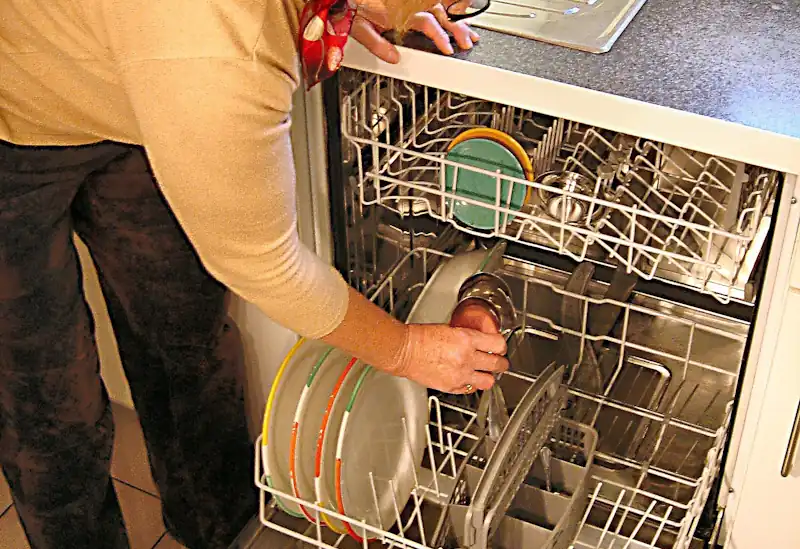
Most conversations about dishwashers focus on money, does it cost more in water and electricity than washing up by hand, is it worth the upfront price, how much does a cycle actually cost to run. All reasonable questions, and worth answering. But they miss what’s usually the bigger deal for most households: time.
Washing up by hand isn’t just the few minutes of actually scrubbing a plate. It’s the washing, then the rinsing, then finding somewhere for everything to dry, then drying it properly if you don’t have space to air dry, then putting it all away, repeated after every single meal, every single day. A dishwasher replaces almost all of that with a couple of minutes of loading after each meal and one slightly longer unload every few days. The gap between those two routines, added up across a year, is usually a lot bigger than people expect.
This calculator works out exactly how big that gap is for your household, how many hours a week and a year a dishwasher actually saves you, what that time is worth in pounds, and where in the hand-washing routine most of the time is actually going.

Who Is This Calculator For?
This is for anyone who’s ever stood at the sink wondering whether a dishwasher would actually make a meaningful difference, or anyone who already has one and wants to see the real numbers behind the convenience. Especially useful if:
- You’re deciding whether a dishwasher is worth the kitchen space and upfront cost, the time saved is often the part of the decision that gets the least attention, even though for many households it’s the most significant benefit.
- You already have one but still hand-wash a lot of items out of habit, the calculator’s increase scenario shows what shifting more of your washing-up into the dishwasher would actually save you.
- You’re a larger household with multiple meals a day, the time savings compound quickly when there are more dishes generated per meal and more meals per day, which is exactly the situation where a dishwasher’s advantage is largest.
- You’re weighing up whether to replace a broken dishwasher and want a clear sense of what going back to hand-washing would actually cost you in time, not just inconvenience.
- You’re simply curious about the numbers, most people have a vague sense that a dishwasher “saves time” without ever having worked out roughly how much.
What This Calculator Assumes
- It compares loading and unloading time to full hand-washing time, not the dishwasher’s running time. The cycle itself runs unattended, so it isn’t counted as your time, only the minutes you’re actually doing something (loading, unloading) are included, which is the fair comparison.
- It doesn’t include large pots, pans, or items that don’t go in a dishwasher. Most households still hand-wash some items regardless of dishwasher ownership, this calculator focuses on the dishes and items a dishwasher genuinely takes over, which for most people is the majority of daily washing-up.
- If you also want to compare the running cost and environmental impact, our Dishwasher vs Hand Washing Cost Calculator breaks down energy, water, CO₂ and annual cost
How to Use the Dishwasher Time Savings Calculator
Start with meals and household size, how many meals you cook at home per day, roughly how many dishes and items each meal generates, and how many people are in your household. These three numbers set the overall volume of washing-up your routine generates.
The hand-washing section breaks the manual process into its three real components: washing, drying, and putting away. Most people, when asked how long washing-up takes, only think about the washing part, but drying and putting away are real time too, and often add up to nearly as much as the washing itself, particularly in households without space to air-dry.
The dishwasher section works differently, because loading and unloading don’t happen at the same frequency. Loading happens after every meal (you’re putting dishes in as you go), but unloading only happens once per cycle, so the calculator asks how often you actually run the dishwasher, since someone running it daily unloads far more often than someone running it every three days or weekly.
The final section lets you set your own hourly time value, and includes a “what if” slider showing what increasing your dishwasher use by a given percentage would add to your current savings, useful if you currently hand-wash some items out of habit rather than necessity.
A dishwasher doesn't just clean dishes: it gives back time, several times a day, every single day. This calculator works out how much time hand-washing actually takes once you include rinsing, drying, and putting away, compares that to the much shorter time spent loading and unloading a dishwasher, and shows what the difference is worth across a week and a year.
🍽️ Meals & Household
How many meals, how many dishes, how many people.
🧽 Hand-Washing Time
Per meal: how many minutes spent washing, drying, and putting away.
🧺 Dishwasher Loading & Unloading
Loading happens after each meal; unloading happens once per cycle.
⏱️ Your Time & What-If
0 hrs
Hand-washing time minus dishwasher loading and unloading time, per week0 hrs
Weekly time saved multiplied by 52 weeks£0
Annual hours saved converted to pounds using your time value0 min
Hand-washing time per meal minus dishwasher loading time per meal0 hrs
per week, by using the dishwasher0 hrs/yr
Based on your dishwashing habits£0/yr
Per-meal comparison: hand-washing vs dishwasher
Where your hand-washing time goes (weekly)
Share it with friends or family who might find it helpful.
Save on dishwashers and kitchen essentials with Savzz discount codes
Why Hand-Washing Takes Longer Than People Remember
Ask someone how long washing up takes and they’ll usually give you a number for the washing itself: five minutes, ten minutes. What gets left out, almost every time, is everything that happens after the washing: rinsing each item, finding space on a draining rack, drying anything that needs it, and then the separate task of putting everything away once it’s dry.
Drying in particular is easy to underestimate. In a household without much draining rack space, or where dishes need to go back into cupboards quickly, active drying with a tea towel can take nearly as long as the washing itself. Multiply that by several meals a day, and the “five minute job” is often closer to fifteen or twenty minutes once every step is properly counted.
This calculator deliberately breaks hand-washing into washing, drying, and putting away separately, rather than asking for one combined estimate, because most people’s mental estimate of “washing up time” only captures the washing portion, and the other two steps, while individually smaller, add up to a meaningful chunk of the total once you’re doing them after every meal.
What a Dishwasher Actually Replaces
A dishwasher doesn’t eliminate all the time associated with dirty dishes, it concentrates it into two much smaller, much less common tasks: loading, which happens after each meal but takes only a couple of minutes, and unloading, which happens once per cycle rather than once per meal.
This is the structural reason dishwashers save so much time even though the dishwasher itself takes an hour or two to run a cycle, that running time isn’t your time. You’re not standing at the dishwasher while it works; you load it in a couple of minutes and walk away, then come back once, sometime later, to put everything away in one go rather than after every single meal.
The unloading frequency matters more than people often realise when estimating their own savings. A household running the dishwasher daily unloads seven times a week; a household running it every three days unloads only twice or three times. Both load roughly the same total number of items over a week, but the less regular unloader spends noticeably less total time on the unloading step, which is exactly the trade-off the “how often do you run it” setting in this calculator captures.
What the Time Actually Adds Up To
The headline numbers tend to surprise people more than the cost-based comparisons, mostly because nobody naturally thinks in terms of “minutes per meal, multiplied by meals per day, multiplied by days per year.”
A fairly typical two-person household: two meals a day, modest dish volume, around 12 minutes of washing, 5 minutes of drying, and 4 minutes putting away per meal, comes out to roughly 21 minutes of hand-washing per meal, or around 42 minutes a day across two meals. Against a dishwasher loading time of a couple of minutes per meal plus an unload every two or three days, that’s a weekly saving in the region of three to four hours, and an annual saving comfortably over 150 hours.
150 hours is over six full days. Spread across a year, it doesn’t feel dramatic day to day, a dishwasher rarely feels like it’s “saving you six days” in any single moment. But that’s exactly the value of running the actual numbers: small, repeated, easily-dismissed savings compound into something substantial once you see the full-year total in one place.
The Time Value Question
Once you know how much time a dishwasher saves, the natural next question is what that time is actually worth, and this is a more personal calculation than it might first appear.
A simple approach is to use your hourly wage, if you’re paid hourly, or your salary divided by typical working hours if salaried. At a modest £15 an hour and 150 hours saved annually, that’s £2,250 of time value per year, a genuinely large number for what feels like a small daily convenience.
But your time value doesn’t have to be tied to your wage at all. If your evenings are tight because of childcare, work, or simply wanting more downtime, it’s entirely reasonable to value your personal time highly regardless of what you earn during work hours. The honest version of the question is “what would I pay to get this time back,” not “what does my employer pay me”, and for a lot of people, especially those juggling several responsibilities, the answer to the first question is much higher than the second.
Why Some Households Save Far More Than Others
The time savings from a dishwasher aren’t fixed, they scale heavily with household size and cooking frequency, which is why the same calculator can show wildly different results for different households.
A single person cooking one modest meal a day, with relatively few dishes, might find the time saving genuinely small, perhaps 30-45 minutes a week, which barely justifies the kitchen space a dishwasher takes up, let alone the running costs. A family of four or five cooking two or three meals a day, with the higher dish volume that naturally comes with more people and more cooking, can easily see weekly savings of five hours or more, over 250 hours a year, which starts to look less like a convenience and more like a genuinely meaningful return on a kitchen appliance.
This is worth knowing both for people deciding whether to get a dishwasher in the first place, and for larger households who already have one but might be underestimating just how much time it’s actually contributing, because the saving feels diffuse, a few minutes here and there, rather than the large annual total it actually adds up to.
The Easiest Way to Increase Your Time Savings
A surprising number of dishwasher owners still hand-wash a meaningful portion of their dishes out of habit rather than necessity, certain mugs, particular plates, cutlery they’ve always washed by hand, items they assume “need” hand-washing without having checked.
In reality, the overwhelming majority of standard plates, bowls, mugs, glasses, and cutlery sold in the UK are dishwasher-safe, and most manufacturers clearly mark items that aren’t. The exceptions tend to be specific things: certain non-stick pans, fine crystal, hand-painted ceramics, wooden items, and a handful of plastics that warp under heat, rather than the bulk of everyday tableware.
The calculator’s “what if you used the dishwasher this much more” slider is designed to make this visible. Shifting even an extra 20-30% of currently hand-washed items into the dishwasher routine, for households that are hand-washing more than necessary, is often the single easiest way to capture meaningfully more time saving without changing any other part of the routine: no new appliance, no extra cost, just using the one already in the kitchen more fully.
Our home appliance discount codes are worth a look if you’re considering a dishwasher upgrade or replacement, and our cooking and baking deals cover the kitchenware and consumables that come along for the ride either way.
Frequently Asked Questions
How much time does a dishwasher actually save?
It depends heavily on household size and cooking routine, but a common range for a small household is 30-90 minutes saved per week, while larger households with multiple meals a day can see savings of three to six hours per week or more. Annually, this works out to anywhere from roughly 25 hours for a light user to over 250 hours for a busy family household.
Is a dishwasher worth it for a small household or single person?
The time saving tends to be smaller for one or two people with modest dish volumes, often in the range of 30-45 minutes a week. Whether that’s “worth it” depends on what else factors into the decision: kitchen space, the cost of running cycles, and how much that smaller weekly saving is worth to you personally. For larger households, the time case for a dishwasher is usually much stronger.
What takes the most time when washing dishes by hand?
It varies by household, but drying is often underestimated, many people think of “washing up” as just the washing step, when drying and putting items away can collectively take nearly as long as the washing itself, particularly without much draining rack space. The calculator breaks all three steps out separately so you can see which one dominates your own routine.
How often should I run my dishwasher to save the most time?
This is a trade-off rather than a single right answer. Running it more often (daily) means smaller, more frequent unloads; running it less often (every 2-3 days or weekly) means fewer total unloads but each one is for a fuller load. In pure time terms, less frequent running with a full load tends to save slightly more total unloading time, though this needs to be balanced against having enough dishwasher-safe items and storage space to go several days between loads.
Can I put most of my dishes in the dishwasher?
For most standard tableware: plates, bowls, mugs, glasses, and everyday cutlery, yes, the vast majority are dishwasher-safe, and manufacturers typically mark anything that isn’t. Items that commonly need hand-washing include certain non-stick pans, fine crystal, hand-painted or delicate ceramics, wooden utensils and chopping boards, and some plastics. If you’re unsure about a specific item, checking the base or manufacturer’s care information usually settles it quickly.
Who built this calculator?
The Savzz Dishwasher Time Savings Calculator was built by the team at Savzz.co.uk, a UK discount code and money-saving site. We built it because dishwasher conversations almost always focus on running costs and water usage, while the time saved, often the biggest real benefit for busy households, rarely gets a proper number attached to it. This calculator gives you that number, based on your own routine, and shows you exactly where the time comes from. It’s completely free to use, no account needed.