Tea drinkers almost always think they are the cheap option. Coffee drinkers know the habit costs money. Tea drinkers tend to assume they are fine. This calculator exists to test that assumption properly.
A tea bag costs a few pence. But that is only the start of what the habit actually costs: there is the milk, the sugar, the biscuit grabbed with almost every cup, the bought-out teas when you are out or rushing, the workplace rounds where you end up making drinks for four other people, and the electricity from boiling the kettle five or six times a day. Add it all up honestly, and the annual figure tends to surprise people.
This tool covers all of it. The home brewing cost per cup, the bought-out total, what the accompaniments add over a full year, the time you spend waiting for kettles and queueing, and the behavioural patterns: stress teas, boredom teas, social teas, that quietly inflate the count beyond what you would choose on a genuinely calm, unhurried day.

Who Is This Calculator For?
It is for anyone who drinks tea often and has never sat down and actually worked out what it costs across a year. Most useful if you are:
- Someone who drinks four or more cups a day and has always assumed tea is basically free, this shows what it actually adds up to once milk, electricity, and everything that comes alongside it is counted
- Anyone who buys tea out regularly: from a cafe, a bakery, a canteen, or a takeaway counter, and has never properly tracked how often that happens or what it costs across twelve months
- Someone who takes part in workplace tea rounds and wants to understand how much time and supplies that costs them annually beyond their own drinking
- Anyone trying to get a clearer picture of their daily spending who wants to include their tea habit in an honest monthly budget rather than leaving it off because it feels too small to matter
- Someone who drinks tea to manage stress, boredom, or as a way to step away from tasks and is curious about how much that behavioural pattern adds to the annual total
- Anyone comparing the real cost of home-brewed tea against bought-out alternatives and wanting a number to work with rather than a rough guess
Who Is This Calculator Not Suitable For?
- Anyone wanting exact figures pulled from their bank account. The calculator works on your estimates and inputs rather than live transaction data. If you want a precise audit of every tea purchase across a year, your bank’s transaction search is the better tool for that. This one is about understanding the overall pattern and the annual picture.
- Anyone looking for health or nutritional information about tea. This is purely a money tool. It does not look at caffeine, antioxidants, hydration, or anything health-related. There are better resources for that side of things.
How to Use the Tea Spending Calculator
Start with the tea habit section. Set how many cups you drink per day, how many of those are bought out rather than made at home, and what the typical price is when you do buy. The tea type and source dropdowns help the calculator understand your pattern, a matcha from a speciality cafe sits in a very different cost bracket from a builder’s tea made at your desk.
The workplace round toggle is worth switching on if you make teas for colleagues. It adds the supply cost of making rounds and the time cost of doing it, which most people have genuinely never thought about as a number.
The home tea section is where the real picture emerges. Set your pack price, the number of bags you get from it, how much milk you use per week specifically for tea, and the electricity rate. The calculator converts all of this into a cost per cup and shows the annual home total alongside what you spend bought out, so you can see the gap directly.
Toggle on any add-ons that apply in the accompaniments section. A biscuit with every cup is the most common one and the most overlooked, 30p per biscuit once daily adds £109 per year before anything else is counted.
Answer the behavioural questions honestly. They are not there to make you feel bad about your tea habits. They shape the multiplier that reflects how much of your tea drinking is habit and emotion rather than actual thirst, and that is the part of the annual cost most calculators do not touch.
The time and financial section handles the budget comparison, how often you overshoot it, and what queueing and kettle time costs across a year when measured against the value of your own time.
Tea drinkers almost always think they are cheap. This calculator finds out if that is actually true. Fill in how you drink, what you add to it, and whether your kettle is really as low-cost as it feels, and see the honest annual number.
🍵 Your Tea Habit
🏠 Home Tea Costs
Most people massively underestimate what their home tea habit costs once you add the bags, milk, sugar, and electricity together.
⚡ Kettle Electricity Cost
A standard 3kW kettle boiled for 3 minutes uses roughly 0.15 kWh. At the current UK unit rate of around 24p, that is about 3.5p per boil: it adds up across a year.
🍪 The Tea Accompaniments
A biscuit with every cup sounds harmless. Toggle on what applies and see the annual reality.
🧠 Why You Actually Drink Tea
These questions shape how the calculator applies a behavioural multiplier. Be honest, the results are more useful that way.
⏱️ Time & Financial
£0
Based on your weekly bought teas£0
Based on your home‑brew inputs£0
Includes extras, travel, browsing, and queue time£0
Adjusted for habit strength & triggers£0
Based on your adjusted annual totalYour tea habit is costing you
£0
per year
Your tea score
0/100
Occasional drinker
Cost breakdown
What behaviour is adding on top
What this pattern looks like
What that money could do instead
⚡ The electricity nobody talks about
Ways to spend less on tea
Share it with friends or family who might find it helpful.
Save on what you do buy with Savzz discount codes
How Much Does the Average UK Person Spend on Tea Per Year?
The UK Tea and Infusions Association has reported that around 100 million cups of tea are drunk in Britain every day, making it the most popular hot drink in the country by volume. Most of that is made at home, which creates the widespread assumption that the habit is essentially free.
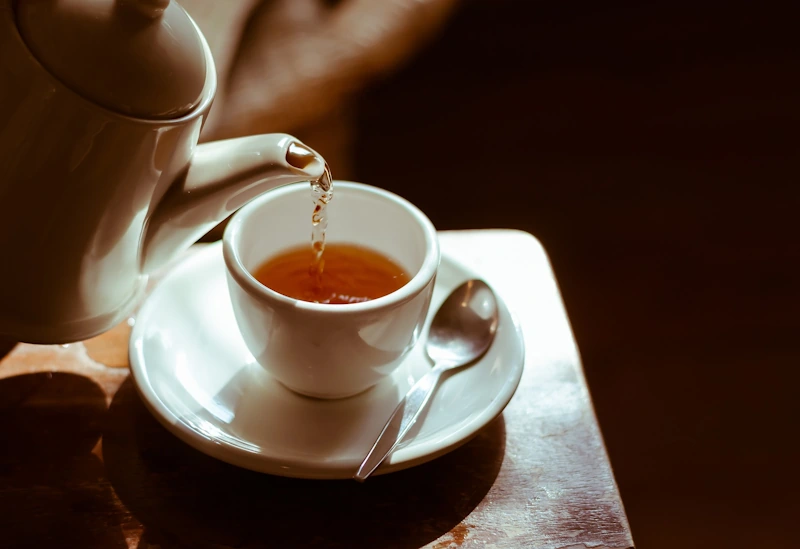
It is not free, but it is genuinely cheap compared to coffee when it comes to the base ingredient. A standard tea bag from a supermarket costs around 2p to 4p. Add in the milk, roughly 4p to 8p per cup depending on how much you use, and a small electricity cost for the kettle, and a home-brewed cup of builder’s tea comes to somewhere between 6p and 15p. That is about as cheap as a hot drink gets.
The annual cost expands from there. Someone drinking five cups a day entirely at home, including milk and electricity, spends around £80 to £140 per year. That is genuinely modest. But factor in bought-out teas, even two or three per week from a cafe or canteen at £1.80 to £3.00 each, and the total climbs to £270 to £400 before anything else is counted.
Add regular biscuits, the occasional slice of cake, speciality teas at a premium price, and the behavioural cups that happen because of stress or routine rather than actual thirst, and a realistic annual figure for a regular tea drinker who also buys out occasionally is £300 to £700. For people with a strong habit, expensive tastes, or a heavy bought-out pattern, it goes higher.
The point is not that tea is expensive. It is that the habit costs more than most tea drinkers have ever calculated, and the gap between what they assume and what the real number turns out to be is usually a surprise.
The Real Cost of a Tea Bag: Home Brewing Properly Broken Down
Because tea feels so cheap, most people have never broken down what a home-brewed cup actually costs end to end. It is worth doing properly.
The tea bag itself. A 160-bag box of Yorkshire Tea or PG Tips from a supermarket typically costs between £3.50 and £5.00, putting the per-bag cost at around 2p to 3p. Loose leaf teas and specialist blends cost more, anywhere from 10p to 40p per cup depending on quality. Herbal and fruit teas sit in the middle, typically 8p to 20p per bag.
Milk. A splash of semi-skimmed in a standard mug uses roughly 30ml. At current UK supermarket prices, that is around 3p to 5p per cup. If you drink your tea strong with a good amount of milk, or use the whole mug as a white tea, it is closer to 8p to 12p. Oat milk raises this to around 10p to 18p per cup depending on the brand.
Electricity. A standard 3kW kettle boiled for three minutes uses approximately 0.15 kWh. At around 24p per kWh, the current approximate UK unit rate, that is about 3.5p per boil. Most people boil the kettle four to six times a day for tea. That works out to roughly £18 to £30 per year in electricity attributed to tea alone. It is not huge, but only boiling the amount of water you actually need rather than filling the kettle each time cuts it by around a third without changing anything else about the habit.
Sugar and sweetener. One teaspoon of sugar per cup costs around 0.5p to 1p. At five cups a day that is roughly £9 per year, easy to forget because the cost is so small per unit, but real over twelve months.
Put together, a home-brewed cup of standard builder’s tea costs between 8p and 20p once everything is included. Speciality or loose leaf teas push that to 20p to 50p per cup. That is still a fraction of the bought-out price, but it is not quite as close to zero as the tea bag price alone suggests.
The Workplace Tea Round: A Hidden Cost Nobody Calculates
This is probably the most underappreciated cost in the whole tea category, and it affects a large portion of UK workers.
Taking part in a workplace tea round means making tea not just for yourself but for the three, four, or five people in your office group, two or three times a day. In practice, this means that for every cup you drink at work, you are also contributing to making a round of drinks for others.
The supplies cost of this is real. If you are making teas for four colleagues twice a day across a working year of around 240 days, that is roughly 1,920 cups of tea made for other people. At 8p to 12p per cup in bags, milk, and electricity, that is £154 to £230 per year in supplies that you are providing or adding to, beyond your own drinking.
There is also the time cost, which is arguably larger. Making a round of five teas, walking to the kitchen, waiting for the kettle, making the drinks, and returning takes around seven to ten minutes. Twice a day, five days a week, for forty-eight working weeks, adds up to around 56 to 80 hours per year. At even a modest time value of £15 per hour, that is £840 to £1,200 of your time spent annually on making tea for colleagues. Most people have never put a number on that.
None of this is a reason to opt out of the tea round. There is genuine social value in it, and opting out in most office environments is a social statement rather than a neutral choice. But it is worth knowing what is actually in the number when you look at your annual tea total.
Why Tea Drinkers Drink More Than They Plan To
Tea is the perfect low-deliberation behaviour. The individual act: getting up, boiling the kettle, making a cup, feels like a break rather than a spending decision, because at home it genuinely costs almost nothing. This makes it one of the easiest habits to run on autopilot without any awareness of how much it is happening.
A few patterns are worth understanding because the calculator applies them to your result directly.
The stress cup. Tea as a response to stress or difficult moments is culturally embedded in the UK in a way that almost no other drink is. “Put the kettle on” is not just a phrase, it is a genuine default behaviour when things feel difficult. The problem financially is not the cost of any single cup. It is that stress-driven cups happen more often than planned cups, which means the daily count is higher than the drinker estimates when asked.
The boredom brew. Making tea is a sanctioned way to take a break. It has a destination, a legitimate purpose, and something warm to show for it. For people working through long stretches at a desk, the kettle trip becomes a way to manage the discomfort of concentration rather than a genuine tea need. This adds cups to the daily count that the drinker almost never attributes to boredom when thinking about how much tea they drink.
The social round effect. In shared homes and offices, the question “do you want a cup?” creates a social pull that is genuinely hard to resist. Most people say yes even when they are not really thirsty, because saying no breaks a small social ritual. The result is that several cups per day for many regular tea drinkers are consumed primarily because someone else offered rather than because they actively wanted one.
The procrastination brew. Getting up to make tea before starting a difficult piece of work, or as a break between tasks, is one of the most common forms of task avoidance in the UK. Again, the cost of each cup is negligible. But across a year, the aggregate adds real volume to the habit, and if those cups start coming with a biscuit, the annual total moves meaningfully.
Bought-Out Tea vs Home Tea: Does the Price Difference Actually Matter?
The gap between a home-brewed cup and a bought-out one is proportionally larger for tea than it is for almost any other drink.
A home-brewed cup of standard tea costs around 8p to 15p. The cheapest bought-out equivalent: a tea from a service station, a canteen, or a budget cafe, costs around £1.00 to £1.50. A tea from Costa or Starbucks runs £2.50 to £3.20. A speciality chai or matcha from an independent cafe can be £4.00 to £5.50.
The ratio here is stark. A £2.50 Costa tea costs roughly twenty times what the same drink costs at home. For coffee the equivalent ratio is around ten to fifteen times. Tea drinkers who buy out regularly are, cup for cup, paying a larger premium over their at-home cost than coffee drinkers are.
The practical implication is that even a small shift away from bought-out teas makes a real difference to the annual total. Replacing two bought-out teas per week with home-brewed ones, a total of around 104 cups across a year, saves roughly £200 to £500 depending on where those teas were being bought from.
A flask is the simplest intervention. Making tea at home and carrying it takes thirty seconds longer than buying a cup out and saves the full price differential every time. For commuters who currently buy a tea on the way to work most days, a flask and a decent bag of tea pays for itself inside a week.
The Biscuit Problem: Why Tea Add-Ons Cost More Than People Realise
This is the tea equivalent of the cafe pastry, the accompaniment that does not feel like part of the tea bill but appears alongside it.
A biscuit with every cup sounds harmless. At home, a Digestive biscuit costs around 5p to 10p. But bought alongside a cafe tea, a biscuit or traybake costs £1.00 to £2.50 per portion. And for many tea drinkers, having something sweet with a cup is not occasional, it is a reflex.
At home: a biscuit per cup, five cups per day, at 8p each, adds £146 per year. Still real, and still something most people have never counted.
From a cafe alongside a bought-out tea: one biscuit or slice of cake with each visit, twice a week at £1.50, adds £156 per year, on top of the tea cost.
The other add-ons accumulate quietly too. Oat or almond milk in herbal or speciality teas adds 30p to 50p per cup when bought out, and around 8p to 15p at home. Honey or premium sweeteners add 10p to 20p per cup depending on the type. Flavoured syrups in chai or matcha drinks add 50p to 70p per shop purchase.
None of these feel like meaningful spending decisions in the moment. Across a year they can add £200 to £400 to the base tea total for someone who is consistent with them.
Five Ways to Spend Less on Tea Without Giving It Up
- Get a flask and use it for the commute or office. This single change addresses one of the most expensive tea patterns, buying a cup out in the morning or during the day when a home-brewed equivalent would cost a fraction of the price. A decent insulated flask keeps tea hot for several hours. At £2.50 per bought-out tea replaced, three times a week, the saving is roughly £390 per year. The flask pays for itself in days.
- Buy your tea, milk, and accompaniments from a supermarket rather than a cafe. The price gap between a biscuit from a tin at home and one bought at a counter alongside a cup of tea is around fifteen to twenty times. The same applies to oat milk, a litre from a supermarket costs about the same as the oat milk surcharge on three cafe drinks. Our grocery discount codes and hot drinks deals often include working codes for the supermarkets you are already using.
- Only boil the water you actually need. Filling the kettle to the top and boiling the full amount every time wastes around 30% to 40% of the electricity used. This is genuinely one of the simplest changes to make, it costs nothing, takes no thought after the first few times, and cuts the annual electricity cost of tea by a meaningful amount.
- Be honest about which teas you are actually choosing versus which ones happen by default. The behavioural section of the calculator is useful here. If a portion of your daily cups are happening because of stress, boredom, or social momentum rather than because you actually wanted one, being aware of that pattern is usually enough to reduce it slightly. Even cutting two or three cups per week that were not genuinely wanted makes a difference to the add-on spend that comes with them.
- Check Savzz before buying tea supplies. Our hot drinks discount codes cover tea bags, loose leaf, and speciality teas from a wide range of UK retailers. Our food and drink deals often include supermarket codes that apply to milk, biscuits, and everything else that ends up alongside a cup. Checking takes thirty seconds and often saves something on the weekly shop.
What Could You Do With the Money Instead?
This is a question worth sitting with once you have your figure from the calculator.
For most regular tea drinkers who also buy out occasionally, the annual total tends to land somewhere between £200 and £500 when home brewing, bought-out teas, add-ons, and electricity are properly counted. For people with a strong habit, a regular bought-out pattern, and a biscuit or two with most cups, the total can sit comfortably above £600.
At £400 per year that is £33 per month. Over five years that is £2,000. It is not going to transform anyone’s financial position, but it is not nothing either, it is roughly the cost of a short UK break, a year of a gym membership, a meaningful contribution to an emergency fund, or a small but regular ISA payment.
At £600 per year the picture shifts a bit. Over five years that is £3,000, enough for a decent holiday, a debt repayment, or the start of a useful investment habit.
The point is not that you should stop drinking tea. For most people the habit adds real value to the day: the breaks, the ritual, the social side of it, the comfort of something warm when things are difficult. All of that is worth something that does not show up in the financial calculation.
The point is simply that it costs more than most tea drinkers have ever sat down and worked out, and knowing the number is more useful than not knowing it.
Our hot drinks discount codes, grocery vouchers, and beverages deals mean that when you do buy, you are not paying full price for the supplies.
Frequently Asked Questions
How much does the average UK person spend on tea per year?
It depends heavily on how much they buy out versus brew at home, and what they have alongside it. Someone who drinks entirely home-brewed builder’s tea with no extras spends around £50 to £100 per year including milk and electricity. A regular tea drinker who also buys out two or three times a week and has a biscuit with most cups at home is more realistically in the £300 to £500 range. Use the calculator above for a figure based on your specific pattern.
Is making tea at home actually cheaper than buying it from a cafe?
Yes, by quite a lot, and the gap is proportionally larger for tea than for coffee. A home-brewed cup of standard tea costs around 8p to 15p all in. A cafe equivalent starts at around £1.50 and often costs £2.50 to £3.50 at most chains. The ratio is around fifteen to twenty times more expensive for the bought-out version. For a commuter buying one tea per working day from a cafe rather than making one at home, the annual difference is around £400 to £600.
What does boiling the kettle cost per year?
At the current UK electricity rate of around 24p per kWh, a standard 3kW kettle boiled for three minutes costs approximately 3.5p per boil. Boiling it five times per day across a full year comes to around £25 to £32 in electricity. Only filling the kettle with the amount of water you actually need, rather than filling it fully each time, reduces this by around a third. The calculator lets you adjust the electricity rate if yours is higher or lower.
How much do workplace tea rounds really cost?
More than most people expect when they add it up properly. Making teas for four colleagues twice a day across a working year involves around 1,900 extra cups. In supplies: bags, milk, electricity, that is roughly £150 to £230 per year beyond your own habit. The time cost is larger: at around eight minutes per round, twice a day, five days a week, you spend roughly 64 hours per year making tea for other people. Whether that time has financial value is a judgement call, but it is a real number.
How much do tea add-ons cost per year?
More than they look individually. A biscuit per cup at home, five cups a day at 8p per biscuit, is £146 per year. Oat milk at 40p extra per bought-out cup, three times a week, adds £62 per year on top of the tea cost. A slice of cake with the weekly cafe tea at £1.80 per visit is £94 per year. These feel like rounding errors but they add £150 to £400 to the annual total for regular tea drinkers who are honest about what they actually have alongside their cups.
Is loose leaf tea cheaper or more expensive than tea bags?
It depends on the brand and quality, but loose leaf is often cheaper per cup than people assume. A decent loose leaf tea at £8 to £12 per 100g, producing around four to five cups per gram, works out to around 16p to 30p per cup, more than a basic tea bag but not dramatically so, and often much better value than speciality bags at equivalent quality. The main downside is that it requires an infuser or a teapot, and the setup time is slightly longer than dropping in a bag.
How do I calculate the cost per cup of home tea?
Divide the price of your tea pack by the number of servings you get from it. Add your weekly milk cost for tea divided by the number of cups you brew in a week. Add a rough electricity cost of 0.5p to 1p per cup for the kettle. For most setups this comes to between 6p and 25p per cup depending on the tea type and how much milk you use. The home section of the calculator does this automatically based on your inputs.
Who built this calculator?
The Savzz Tea Spending Calculator was built by the team at Savzz.co.uk, a UK discount code and money-saving site. We built it because every tea cost calculator we could find either just multiplied a bag price by 365 or ignored the bought-out teas, the biscuits, the electricity, the workplace rounds, and the behavioural patterns entirely. This one adds all of those up in one place, compares your home brewing cost against your bought-out spending, and shows the annual figure in a way that is genuinely useful rather than flattering. It is completely free to use and needs no sign up.