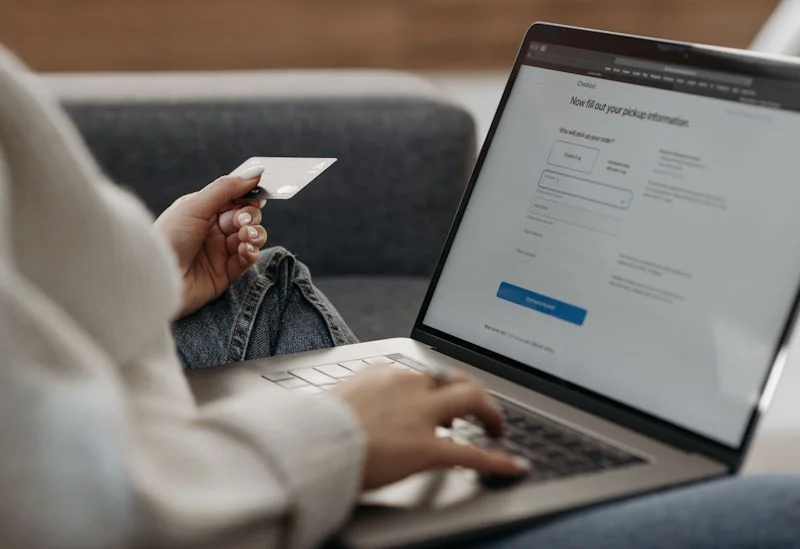
You did not sit down and decide to buy anything. You were on the sofa with nothing to do, the phone was already in your hand, and twenty minutes later there was a £15 Amazon order confirmed and a parcel on the way that you would struggle to explain the next morning. Nothing about that felt like shopping at the time. It felt like filling a gap.
That is the pattern this calculator is built around. Boredom spending is not really about wanting things. It is about needing something to do, chasing a small hit of stimulation, or avoiding the flat, restless feeling of having nothing in front of you. The purchase itself is almost beside the point, a side effect of reaching for a phone rather than a genuine decision to acquire something.
What makes it worth putting a number on is that none of these moments feel like much individually. A £15 Amazon buy here, a £20 ASOS order there, a takeaway ordered because scrolling Deliveroo gave your hands something to do. None of it registers as real spending at the time. Added up across a year, and adjusted for how much your particular boredom level tends to amplify it, the total is almost always higher than people expect going in.
The boredom multiplier is what sets this calculator apart from an ordinary spending tracker. Your base costs are what these categories would cost you regardless of mood. The multiplier, running from x1.10 for mild boredom up to x1.70 for the kind of shopping-as-escape pattern that shows up in severe cases, shows how much of your annual total comes from the emotional state itself rather than the items you actually bought.

Who Is This Calculator For?
This is for anyone who has a sense that they spend more on quiet evenings or dull weekends than they do when life is busy, but has never worked out what that gap actually adds up to. It is particularly relevant if you are:
- Someone who browses shopping apps with no specific purchase in mind. The TikTok Shop scroll, the Amazon browse, the ASOS session that started as window shopping and somehow ended at checkout.
- Anyone who orders takeaways more often than they would if they had to plan it in advance. The Deliveroo order placed because you were bored rather than hungry, or because picking a restaurant gave you something to decide.
- People who buy things they see on social media in the moment rather than sitting on it. Products pushed by TikTok creators, an Instagram ad that caught a distracted eye, a YouTube sponsor read that landed at exactly the wrong bored moment.
- Anyone who does most of their unplanned shopping late at night. Tiredness, low inhibition, and a phone full of shopping apps is one of the most reliably expensive combinations for impulse spending.
- Someone who regularly has parcels turn up that they had genuinely forgotten ordering. That is a fairly clean sign that the purchase decision was not a considered one.
- Anyone trying to cut their spending who suspects that a good chunk of what they buy is driven by the mood they were in rather than any real want for the item itself.
Who Is This Calculator Not Suitable For?
- Anyone needing a clinical assessment of compulsive buying behaviour. The boredom spending score here is a financial and behavioural measure of how much boredom is shaping your spending. It is not a mental health assessment. If your relationship with shopping is causing real distress or financial harm beyond what a spending calculator can address, speaking to a GP or a financial counsellor through the Money and Pensions Service is a more appropriate next step.
- People looking for a full budget or net worth tracker. This tool focuses specifically on boredom-driven spending rather than total household expenditure. For a full financial overview, a dedicated budgeting tool will serve you better.
How to Use the Boredom Spending Calculator
Start with the boredom profile section at the top. Choose when boredom tends to hit you hardest, evenings, weekends, late at night, or work breaks. Then set the boredom severity slider. This is the single most important input in the whole calculator, so be honest rather than aspirational with it. The slider runs from not bored at one end to filling a void at the other, with a multiplier that ranges from x1.0 up to x1.70. Your boredom level amplifies every category total, so an accurate setting here produces a far more useful result than one you have quietly rounded down.
In the spending categories section, toggle on whatever applies to your own pattern: snacks, takeaways, small Amazon buys, clothing, beauty products, digital purchases, hobby items, coffee bought for something to do, homeware, tech. For each category, enter what it typically costs per occasion and how often it happens. There is also a regret rate field for each one, how often you regret the purchase afterwards, which feeds into your score rather than the money total, since this is tracking the emotional pattern as well as the spend.
The digital triggers section shapes your boredom score by asking about specific behaviours: TikTok purchases, Amazon browsing with no intent, notification-triggered buying, late-night shopping. It is worth completing the BNPL and credit section too if any of your boredom purchases go through Klarna or similar, since those carry a cost on top of the purchase price.
Boredom spending is one of the most consistent and least acknowledged forms of impulse buying. It is not about wanting things. It is about filling time, seeking stimulation, or avoiding something else. This calculator adds up what that pattern is actually costing you, and how much your boredom level is amplifying it.
Your Boredom Profile
Boredom-Driven Spending
For each category that applies, toggle it on and enter what you typically spend and how often. Only include purchases you make because you are bored, restless, or avoiding something: not planned spending.
Digital Triggers
These questions shape your boredom spending score. Answer honestly rather than aspirationally.
BNPL and Credit Use
Boredom purchases made on credit or BNPL cost more than the price tag suggests. Leave at 0 if you always pay in full.
How Much Does Boredom Spending Cost UK Adults Per Year?
The research on impulse buying and boredom-triggered spending tells a fairly consistent story across several recent studies, and the figures tend to be bigger than people guess going in.
A 2023 survey by Finder found that UK adults spend an average of £1,100 a year on impulse purchases. A OnePoll survey found that 68% of UK adults describe themselves as impulse shoppers, with most naming boredom as the main trigger. Research from Capital One found that 54% of UK consumers had regretted an impulse purchase made while bored, with the average regretted purchase costing around £35.
A 2024 Barclaycard report found that TikTok and Instagram were the biggest drivers of unplanned purchases among under-35s, with 40% of respondents having bought something directly through a social media app without any prior plan to. The average spend on social-media-triggered purchases in this group came to around £45 per transaction.
None of these studies fully capture the compounding effect of the boredom multiplier on its own. Someone spending £30 on a takeaway because they are genuinely hungry and fancy something nice is making a considered purchase. Someone spending the same £30 because they are bored and opening Deliveroo gave their hands something to do is in a different position entirely, one where boredom is doing most of the work and the food is almost incidental. The annual total for the second person does not just sit higher, it grows faster too, because boredom tends to be a steady condition rather than an occasional one.
The Boredom Multiplier: Why Your Mood Matters More Than the Price Tag
The boredom multiplier is what separates this calculator from a plain spending total, and it is worth understanding what it is actually measuring.
Research into consumer behaviour finds that purchases made in a bored state share several traits with other emotionally driven impulse buys. They happen faster than considered purchases, they skip price comparison more often, they tend to land on a pricier option than intended, and they get regretted more often afterwards. The same person, looking at the same product at the same price, will make a genuinely different call when bored than when they are engaged and thinking clearly.
The multiplier in the calculator reflects this effect on your annual total. At mild boredom, x1.10, you are occasionally making a slightly pricier or unnecessary choice out of restlessness. At moderate boredom, x1.25, roughly a quarter of your spending in these categories comes from boredom rather than want. At high boredom, x1.45, close to half of your annual cost in boredom-prone categories traces back to the mood rather than the items themselves. At extreme boredom, x1.70, shopping has effectively become a coping mechanism, and the cost reflects that.
The figure you get by subtracting your base annual cost from the boredom-adjusted total, the part attributable to the boredom level itself, is usually the number that makes people stop and think. For someone with a high boredom rating and several active categories, that boredom premium can easily reach £400 to £800 a year.
The Technology Built to Make Boredom Spending Worse
The platforms and apps involved in boredom spending are built specifically to catch idle moments and turn them into purchases. Seeing how that works helps explain why willpower alone rarely holds up against it.
TikTok Shop and Instagram Shopping. The route from a product video to a completed purchase on TikTok Shop can take under thirty seconds. The content is personalised, the products appear in aspirational settings, the creator’s recommendation acts like a trusted friend’s opinion, and the friction of buying has been designed out almost entirely. Engaging content, social proof, an easy purchase, and delivery to your door: that combination is built for boredom-state purchasing rather than deliberate shopping.
Amazon’s browsing design. Amazon’s homepage and recommendation engine are not there to help you find what you came for. They exist to show you things you did not know you wanted until you saw them. One-click purchasing, next-day delivery, and near-endless product discovery make Amazon one of the most effective boredom-spending environments ever built. A session that starts with “I’ll just check if they have X” often ends with a basket containing X plus several things the algorithm surfaced during a quiet moment.
Push notifications from shopping apps. Sale alerts, back-in-stock notifications, personalised discount codes, flash sale countdowns, these are built to start a shopping session at a moment when you were not already thinking about buying. The trigger comes from outside rather than from any internal want, which means the purchase that follows is more likely to be driven by boredom or impulse than by need. Turning off these notifications is one of the simplest and most effective changes for cutting unplanned spend, because it removes the external trigger without stopping you shopping on purpose when you want to.
BNPL apps in a bored moment. Buy now pay later services lower the mental barrier to a purchase by making the money feel less real. A £45 item split into three payments of £15 feels a lot cheaper than £45 up front, even though it plainly is not. In a bored moment with lowered inhibition, the reduced friction of a BNPL checkout speeds things up in a way that research consistently links to bigger baskets and a higher chance of buying at all. For people whose boredom spending regularly runs through BNPL, the true cost is not just the purchase price, it is the interest, the late fees if instalments are missed, and the knock to credit scores where missed payments get reported.
Why Boredom Spending Is Different from Other Impulse Buying
Impulse buying is a broad label covering behaviours with quite different drivers underneath. Boredom spending is a specific version of it, and it turns out to be both more predictable and more fixable than some other forms of impulse purchasing.
Unlike stress spending, where a purchase provides comfort or reward in response to a negative feeling, boredom spending is mostly about chasing stimulation. In a bored state, the brain actively looks for new inputs to lift an arousal level that feels too flat. Buying something new gives a brief spike of novelty, the anticipation before it arrives, the parcel showing up, the unboxing. That is not a character flaw. It is a fairly ordinary piece of human psychology that platforms have got very good at exploiting.
Unlike FOMO-driven buying, where the purchase is triggered by fear of missing a limited-time offer, boredom spending is not really an urgency response. The boredom shopper is not usually reacting to time pressure. They are reacting to a lack of anything more engaging in front of them. That distinction matters because the fixes differ: FOMO spending responds to slowing down and checking whether the urgency is even real, while boredom spending responds to building genuine engagement with something that is not shopping.
The regret rate on boredom purchases runs consistently higher than on other kinds of purchase. Consumer behaviour research typically finds that 40 to 60% of purchases made in a bored state get regretted within two weeks. The item arrives, the brief novelty of waiting for it fades, and what is left is something that was never really needed or wanted, just a way of passing a few hours.
The Late-Night Shopping Problem
Late-night purchasing earns its own section because it is the single most consistently costly boredom-spending pattern, and the hardest one to shift through willpower alone.
The mix of factors present at midnight on a weekday evening is close to perfectly set up for impulse buying. Tiredness clearly weakens decision-making, research in cognitive science has repeatedly found that the brain’s ability to weigh up risk, consider alternatives, and hold back on impulse drops off with fatigue. Social inhibition is lower. The phone is already in your hand. Shopping apps are a swipe away. Nothing else in the room is competing for attention.
The result is that people buying things at midnight often cannot properly explain the next morning why they wanted the item. The decision was made by a tired version of themselves with reduced capacity, in a boredom-plus-fatigue state, which is about as far from deliberate as a purchasing decision gets.
The most effective fix for late-night purchasing is not trying to resist the urge in the moment, it is making the purchasing route harder to reach before the tiredness sets in. Moving shopping apps off the home screen takes thirty seconds while you are alert and adds just enough friction at midnight to break the loop before it completes. A browser extension that blocks shopping sites after a set time does something similar. Neither one asks anything of your willpower in the moment because the friction is already built in beforehand.
Five Things That Actually Reduce Boredom Spending
- The 24-hour wishlist rule, applied every time. For any non-essential purchase made in a bored moment, something seen on TikTok, found while browsing Amazon, added to a basket on a quiet evening, save it to a wishlist and revisit it after 24 hours. Anything that still feels worth buying after a day’s reflection genuinely is. This filter works because research on the approach finds that 60 to 80% of items added in a boredom state do not survive the 24-hour review, without restricting any purchase you actually mean to make.
- Turn off every shopping app notification on your phone. This takes about two minutes in your settings and removes the external trigger behind most notification-driven boredom spending. It does not stop you shopping on purpose, you can still open the app, search for what you want, and buy it. It just stops the app from manufacturing the moment of temptation. For a lot of people this single change alone cuts unplanned purchases by 30 to 40% with no sense of restriction at all.
- Work out your own boredom windows and plan around them. Boredom spending tends to cluster in predictable slots, typically evenings between 8pm and 11pm for anyone working full time. Having something already lined up for that window that engages the same novelty-seeking part of the brain, a book you are actually into, a series you are watching on purpose rather than as background noise, a physical hobby, even a walk, closes the gap that shopping would otherwise fill. The aim is substitution rather than sheer discipline.
- Check for a discount code before any purchase you do make. If you are going to buy something regardless, spending ninety seconds on our clothing vouchers, health and wellbeing offers, or gaming discount codes page before checkout is the minimum sensible step. If the purchase is boredom-driven but you are making it anyway, paying less for it is still worth having.
- Set a monthly boredom spending budget instead of trying to cut it out completely. Total abstinence from boredom purchasing rarely holds for most people, and trying to enforce it tends to produce a rebound later. A specific monthly allowance for unplanned or boredom-driven buys, £30 or £50, whatever feels reasonable, keeps the habit inside a defined limit rather than treating it as forbidden, which usually makes it more tempting rather than less. Once that month’s allowance is gone, anything else goes on the wishlist instead of in the basket.
Frequently Asked Questions
How much do UK adults spend on boredom buying per year?
Research puts the figure for impulse and unplanned spending among UK adults at around £800 to £1,500 a year for people who identify as impulse shoppers, and higher again for those with high boredom levels and regular social-media-triggered purchasing. The calculator above builds a personal estimate from your own categories and boredom level rather than relying on a national average that may not match your own pattern.
Why do people spend more money when they are bored?
Boredom is a low-arousal state that the brain actively tries to fix by seeking out novelty. Buying something new provides a short spike of arousal, the anticipation, the decision, the arrival. Shopping apps are built to be available in exactly those low-stimulation moments and to turn that state into a transaction. The behaviour is not a character flaw, it is a fairly predictable response to an environment that has been deliberately engineered to produce it.
What is impulse buying caused by boredom?
Boredom-driven impulse buying is a purchase made mainly to create stimulation or pass time rather than because you need or truly want the item. It tends to involve a fast decision, little or no price comparison, spending more than intended, and a fairly high chance of regret within days. It shows up most in quiet evenings, late nights, unstructured weekends, and work breaks, moments where idle hands and a phone make shopping the path of least resistance.
How can I stop spending money when I am bored?
The most effective approach is cutting off access to the purchasing pathway, moving shopping apps off the home screen, switching off notifications, rather than trying to resist the urge once it has already formed. The 24-hour wishlist rule removes most boredom purchases by forcing a second decision made outside the bored state. Working out your own boredom windows and lining up genuine engagement for them tends to beat relying on willpower in the moment. A monthly boredom-spending budget that allows some unplanned buying within a set limit is more sustainable long term than trying to cut it out entirely.
Is boredom spending the same as retail therapy?
They overlap but are not the same thing. Retail therapy is buying for emotional comfort, usually in response to stress or a low mood. Boredom spending is mostly about seeking stimulation rather than comfort, the underlying state is under-stimulation rather than sadness or stress. The behaviour looks similar from the outside, but the driver is different, which is why the fixes differ too. Boredom spending responds well to substituting in genuine stimulation, while retail therapy responds better to emotional awareness and other sources of comfort.
What is the boredom spending multiplier?
The boredom multiplier in this calculator represents how much a bored mood amplifies your spending in susceptible categories. At mild boredom the multiplier is x1.10, meaning your base spending in these categories rises by around 10% because of boredom-driven decisions. At extreme boredom the multiplier is x1.70, meaning close to two-thirds of your spending in these categories comes from the boredom state rather than any real want for the items. It is drawn from consumer behaviour research on the link between emotional state and the quality of purchase decisions.
Who built this calculator?
The Savzz Boredom Spending Calculator was built by the team at Savzz.co.uk, a UK money-saving and discount code site. We build free, practical tools designed to give honest, data-driven answers to questions about time and cost. This one exists because boredom is one of the most commonly named triggers for impulse purchasing in the UK, and no existing tool actually puts a number on it, most spending calculators total up what you bought without ever asking why. The boredom severity slider and the multiplier logic are not available in any other UK spending calculator. It is completely free to use with no sign-up required.
Explore More Spending & Shopping Calculators
See how everyday purchases, emotional spending and shopping habits impact your budget:
- Retail Therapy Calculator
- Social Pressure Spending Calculator
- Impulse Spending Trigger Calculator
- Impulse Buy Regret Calculator
- Lottery Ticket Opportunity Cost Calculator
- Treat Yourself Spending Calculator
- Convenience Spending Calculator
- Click and Collect vs Delivery Calculator
- Free Cost Per Use Calculator
- Home Clutter Cost Calculator
- Fast Fashion True Cost Calculator
Final Thoughts
Boredom spending rarely feels like spending while it is happening. It feels like passing the time, or getting rid of a restless ten minutes, or answering a notification that seemed harmless enough to tap. None of it feels like a financial decision, which is exactly why it never gets treated like one.
Seeing the annual figure changes that. It is not there to make anyone feel bad about a Deliveroo order or an ASOS basket on a slow Tuesday. It is there to show how much of that spending is really about the item, and how much of it is really about the boredom, so the next quiet evening can be met with a proper choice instead of a reflex.
If some of that spending is going to happen anyway, there is no reason to pay full price for it. Our clothing vouchers, health and wellbeing offers, and gaming discount codes are worth a quick check before checkout, bored purchase or not.