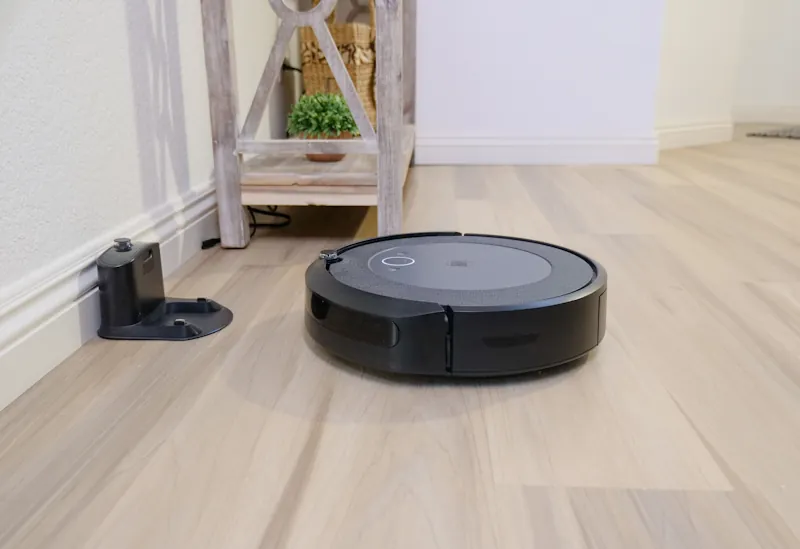
Robot vacuums sit in a strange spot in most people’s shopping decisions. They are not cheap, a decent one is £300 to £700, and the case for buying one is almost always made on convenience rather than numbers. “It just does it for you” is true, but it does not answer the actual question anyone considering one is asking: is this thing going to pay for itself, or is it an expensive way to avoid doing a chore that takes twenty minutes anyway?
The honest answer depends entirely on your specific situation, and almost nobody works it out properly before buying. How much time does your current vacuuming routine actually take, once you include getting the machine out and putting it away? How much of that time does a robot genuinely remove, once you account for emptying its bin and untangling hair from its brushes every week? And what does that saved time mean in pounds, given what an hour of your time is actually worth?
This calculator answers all three questions with your own numbers, then gives you the figure that matters most: how many months or years it takes for the time saved to outweigh what you paid for the robot in the first place.
Who Is This Calculator For?
- Anyone weighing up whether to buy a robot vacuum and wants an actual payback figure rather than a general sense that it would “probably be useful”, the calculator turns the decision into a specific number of months or years
- Anyone who already owns one and wants to know if it was worth it, plugging in your actual usage and maintenance time shows whether the purchase has paid for itself yet, or is on track to
- Pet owners trying to work out whether a robot vacuum is realistic for shedding fur, the pet toggle adjusts both how often manual vacuuming would be needed and how much more often the robot’s brushes need clearing, since this is one of the biggest swing factors in real-world reviews
- Anyone deciding between a budget, mid-range, or premium model, the tier presets show how purchase price trades off against ongoing maintenance time, since cheaper models often mean more manual emptying and brush-clearing each week
- Anyone considering a cleaner instead of a robot vacuum, the comparison section shows manual time, hiring help, and a robot vacuum side by side using your own hourly value and local cleaner rates
- People with larger homes or lots of carpet who suspect their current vacuuming routine takes longer than they account for, and want a clear picture of where that time actually goes each week
Who Is This Calculator Not Suitable For?
- Homes with a lot of stairs, thick rugs, or cluttered floor space. Robot vacuums work best in relatively open layouts. If most of your home involves stairs a robot cannot climb, deep rugs that trap wheels, or rooms with enough furniture and cables that the robot needs regular rescuing, the realistic time saving is lower than the calculator’s open-layout setting assumes. The layout toggle accounts for this to an extent, but a genuinely cluttered or multi-level home will see less benefit than the numbers suggest.
- Anyone expecting a robot vacuum to replace deep cleaning entirely. Robot vacuums are good at daily maintenance cleaning. They are not a substitute for an occasional thorough clean involving edges, under heavy furniture, upholstery, and stairs. The calculator keeps a separate deep clean figure for this reason, it assumes the robot reduces but does not eliminate that task.
- Anyone looking for a precise, tracked record of their actual cleaning time. The figures here are realistic estimates based on your inputs and known patterns for floor type, home layout, and pet ownership. They are not a stopwatch record of your specific home. The payback period is a strong directional guide, not a guaranteed outcome.
How to Use the Robot Vacuum ROI Calculator
Start with the tier buttons if you are still deciding which kind of robot vacuum to get. Budget, mid-range, and premium each fill in a realistic purchase price along with maintenance time that reflects how much manual intervention that tier typically needs, cheaper models tend to need more regular bin emptying and brush clearing, while premium models with self-emptying bases need much less. Pick “I’ll set my own price” if you already know the exact model you are considering and want to enter the figures directly.
Next, set your home size and flooring type. Carpet generally takes longer to vacuum manually than hard floor, and the calculator applies a realistic time adjustment based on which one you select. If pets shed in your home, switch the pet toggle on, this increases both how often manual vacuuming is realistically needed and how much extra time the robot’s brushes will need clearing, since pet hair is one of the most common causes of robot vacuum brush tangling. The home layout buttons account for how much furniture, stairs, or clutter might mean the robot needs occasional manual help to finish a clean.
The manual vacuuming section is about your current routine, not a robot vacuum’s. Be honest about how long a session actually takes, including getting the vacuum out and putting it away, not just the minutes the machine itself is running. If you would consider hiring a cleaner instead of buying a robot, set a realistic hourly cleaner rate so the comparison section has a meaningful figure to work with.
The robot cost section covers the purchase price, ongoing costs like replacement filters and brushes, how many times a week you would run it, and the maintenance time per run. Bin emptying and brush clearing are the two tasks that most robot vacuum reviews mention as the unexpectedly persistent chore, set these honestly rather than assuming the robot needs zero attention.
Set your hourly value in the final section, and use the usage increase slider to see what running the robot more often than your initial setting would add to the annual saving.
Robot vacuums get pitched as a convenience purchase, but the real question is whether they actually pay for themselves. This calculator works out how much time you currently spend vacuuming, how much a robot would realistically save once its own maintenance is accounted for, what that time is worth, and how many months or years it takes before the saved time outweighs the purchase price.
🤖 Which kind of robot vacuum?
Pick a tier to fill in a realistic purchase price and maintenance time. Adjust anything afterwards.
🏠 Your home
Home size and floor type affect how long manual vacuuming actually takes.
Home layout
Open layouts let a robot vacuum clean efficiently with little intervention.
🧹 Manual vacuuming — your current routine
How long does vacuuming actually take you, including getting the vacuum out, moving things, and putting it away?
💰 Robot vacuum cost & upkeep
The purchase price plus what it costs to keep running each year.
⏱️ What is your time worth?
Used to value the time the robot saves you, and to model running it more often.
—
Manual vacuuming time minus robot maintenance time, across a full year—
Annual hours saved × your hourly value: what the saved time is actually worth—
Purchase price ÷ annual net value: how long until the robot has paid for itself—
Time value minus yearly running costs (accessories, parts, electricity)—
0 hrs
£0
Robot vs manual vs hiring a cleaner: annual cost comparison
Manual cost is your time valued at your hourly rate. Cleaner cost uses the £/hr figure you set above for the same vacuuming time. Robot cost is running costs plus the purchase price spread across its first year.
💡 What you could do with that time each week
Based on your weekly time saving from switching to a robot vacuum.
Share it with friends or family who might find it helpful.
Save on the robot itself: Savzz home & appliance deals
The Maintenance Time Nobody Mentions in the Reviews
Most robot vacuum reviews focus on what the machine does well: navigation, suction, battery life, app features. What gets mentioned far less is the weekly maintenance that every robot vacuum requires regardless of price, because it is the less exciting part of the ownership experience and does not photograph well for a product review.
Emptying the bin is the obvious one, even self-emptying models with a base station still need that base emptied periodically, just less often. The less obvious one is brush clearing. Robot vacuums use roller brushes to agitate carpet and pick up debris, and hair: human or pet, wraps around these brushes in a way that genuinely impedes performance if left unaddressed. Anyone who has owned a robot vacuum in a home with long hair or a shedding pet will recognise the specific, slightly unpleasant task of pulling a wound mat of hair off a brush roller every week or so.
This calculator treats maintenance time as a real cost rather than ignoring it, because ignoring it produces a misleadingly large time saving. A robot vacuum that takes six minutes a week to maintain across bin emptying and brush clearing is still saving more time compared to twenty-five minutes of manual vacuuming three times a week, but it is not saving the full twenty-five minutes, three times over, with zero cost. The honest comparison is manual time minus maintenance time, which is what the calculator’s annual saving figure represents.
Why Pet Hair Changes the Calculation So Much
If you have a shedding pet, the standard advice, robot vacuums save you time, needs an asterisk. They still save time. But the shape of that saving is different from a pet-free home, and ignoring this is one of the most common reasons people end up disappointed with a robot vacuum purchase.
In a home with shedding pets, manual vacuuming generally needs to happen more often, because pet hair accumulates visibly faster than ordinary household dust. This pushes up the manual side of the comparison, which on its own would make a robot vacuum look like an even better deal. But the robot side also goes up, because pet hair is precisely the kind of debris that wraps around brush rollers and requires more frequent clearing. Reviews of robot vacuums in pet-owning households consistently mention brush maintenance as the most persistent ongoing task, more so than emptying the bin.
The net effect is usually still positive: running a robot vacuum daily or every other day keeps on top of pet hair in a way that manual vacuuming three times a week simply can’t match. But the maintenance time saved should be calculated honestly rather than assumed to be zero. The pet toggle in this calculator applies a higher multiplier to both manual vacuuming frequency and brush maintenance time specifically to reflect this, so the payback figure for pet owners is realistic rather than optimistic.
Budget, Mid-Range, or Premium: Does the Price Difference Make Sense?
The gap between a £180 robot vacuum and a £750 one is not just about suction power or app features. A meaningful part of what the extra money buys is reduced maintenance time, and this matters more for the payback calculation than most buying guides suggest.
Budget models tend to have smaller bins, simpler navigation, and no automatic emptying, which means more frequent manual bin emptying and, in many cases, more brush tangling because the brush design is less sophisticated at preventing hair wrap in the first place. The lower purchase price is real, but so is the higher weekly maintenance time, which directly reduces the net time saving the robot provides.
Mid-range models, the tier most UK households actually buy, typically include better navigation and either a larger bin or basic self-emptying, cutting maintenance time meaningfully versus budget models without the full premium price tag.
Premium models with self-emptying bases and automatic brush cleaning genuinely reduce weekly maintenance to a few minutes a month rather than a few minutes a week. Whether that justifies the price difference depends entirely on your hourly value and how much time the maintenance saving is actually worth to you over the life of the machine.
For someone with a high hourly value who runs the robot daily, the maintenance time saved by a premium model can be worth more over two or three years than the price difference. For someone with lower usage or a lower hourly value, the budget or mid-range option often reaches a faster payback simply because the purchase price is so much lower.
This is exactly the kind of trade-off the tier presets in this calculator are built to surface, try the same home setup with each tier and compare the payback periods directly.
When the Numbers Say “Never”: And What That Actually Means
For some inputs, the calculator will tell you a robot vacuum never pays for itself. This is not a glitch, and it is worth taking seriously rather than dismissing, because it happens in entirely normal scenarios: a small flat with hard flooring, vacuumed once a week for fifteen minutes, where the annual time saved barely covers the cost of replacement filters and brushes, let alone the purchase price.
This outcome is most common with small homes, low vacuuming frequency, low hourly value, or a combination of all three. It does not mean a robot vacuum is a bad product, it means that for that specific situation, the financial case based purely on time value does not work out, at least not within a reasonable number of years.
This does not necessarily mean the purchase is a bad idea. Convenience has value beyond what a calculator can price, and plenty of people buy robot vacuums for reasons that are not really about saving money: keeping floors consistently clean between deeper cleans, reducing the mental load of remembering to vacuum, or simply preferring not to do the task regardless of how long it takes.
The calculator’s purpose is to give you the honest financial picture so that if you do buy one anyway, you are doing so with a clear understanding of the trade-off rather than an assumption that it will obviously pay for itself.
Robot Vacuum vs Manual Vacuuming vs Hiring a Cleaner
The comparison most people skip is the three-way one: what does each option actually cost across a year, including the value of your own time?
Manual vacuuming costs nothing upfront, but the ongoing cost is entirely your time, valued at whatever your hourly rate or free-time value is. For someone vacuuming three times a week at twenty-five minutes a session, that is roughly 65 hours a year, which at a modest £15/hr hourly value already comes to almost £1,000 in time cost, even though no money is actually changing hands.
Hiring a cleaner for the same vacuuming time replaces your time cost with a cash cost at the cleaner’s rate, typically £12 to £20 per hour in most of the UK. This removes the time cost from your side entirely but is an ongoing cash outlay with no equivalent to a robot vacuum’s one-off purchase price.
A robot vacuum has a real upfront cost plus modest ongoing running costs, but after the first year, the annual cost drops to just those running costs: accessories, replacement parts, and a small amount of electricity. Over a multi-year ownership period, this is often the cheapest of the three options once the purchase price is paid off, which is exactly what the payback period in this calculator is designed to show.
The right choice is not always the cheapest one on paper. Someone who travels often or has mobility considerations might value a robot vacuum’s complete hands-off nature differently from someone comparing pure cost. But seeing all three options against the same time and money baseline, which this calculator’s comparison section does, at least makes the comparison an informed one.
Practical Ways to Improve Your Robot Vacuum’s ROI
- Check Savzz for discount codes before buying. Robot vacuum prices change around sales periods. Our home appliance discount codes and technology deals regularly include offers on major robot vacuum brands, and shaving £50 to £150 off the purchase price directly shortens the payback period shown in this calculator.
- Run the robot more often rather than less. Shorter, more regular cleans generally pick up less debris per run, which means less wear on the brushes and bin, and less time spent on maintenance per session even though the total number of runs is higher. The usage increase slider in the calculator shows the annual time saving from this directly.
- Clear obvious obstacles before each run. Cables, small objects, and loose rugs are the most common reasons a robot vacuum gets stuck and needs manual rescue partway through a clean. A thirty-second tidy before starting a run, particularly in a home with a “mixed furniture” or “cluttered” layout, meaningfully reduces the manual intervention time that eats into the robot’s time saving.
- Match the model to your actual flooring, not an idealised one. If your home is mostly carpet, prioritise a model with strong carpet performance and good brush design for hair pick-up over one optimised for hard floor mopping features you would rarely use. Getting this match right reduces both cleaning time and maintenance frequency.
- For pet owners, look specifically at brush design before buying. Some robot vacuum brushes are explicitly designed to resist hair wrap better than others. This is worth researching specifically if you have shedding pets, since it directly affects the weekly maintenance time that this calculator’s pet toggle accounts for.
- Browse our pet product discount codes for grooming tools that reduce loose hair around the home generally, less hair shed in the first place means less for either a robot or a manual vacuum to deal with, and less brush maintenance regardless of which method you use.
- Check our home accessories offers and home and garden discount codes for replacement filters, spare brushes, and cleaning solutions, buying these with a discount code applied keeps the ongoing running cost down, which directly improves the annual net value the calculator shows.
Frequently Asked Questions
How long does it take for a robot vacuum to pay for itself?
It depends heavily on your current vacuuming time, the robot’s purchase price, and what your time is worth. For a typical household vacuuming three times a week at twenty-five minutes a session, with a mid-range £380 robot vacuum and a £16/hr hourly value, payback is often somewhere between eight months and two years.
Larger homes with more frequent vacuuming and a higher hourly value tend to see faster payback. Small homes with infrequent vacuuming and a low hourly value sometimes never reach payback on a pure time-value basis. Use the calculator with your specific numbers for an accurate figure.
Do robot vacuums actually save time, or just feel like they do?
They genuinely save time for most households, but less than the headline comparison suggests once maintenance is properly accounted for. The honest saving is manual vacuuming time minus the time spent emptying the bin and clearing the brushes, not manual time alone. For most homes this net figure is still a meaningful saving, commonly somewhere between 30 and 90 minutes a week, but it is not the “completely hands-off” experience some marketing implies.
How much maintenance does a robot vacuum actually need?
Most models need the bin emptied every few runs (unless they have a self-emptying base) and the brush rollers cleared of tangled hair roughly weekly, more often in homes with pets or long hair. Budget models tend to need slightly more frequent attention than premium ones with automatic emptying and brush cleaning. Across a typical week this might be five to fifteen minutes total, which is real time but still considerably less than equivalent manual vacuuming for most households.
Are robot vacuums worth it with pets?
Generally yes, though the maintenance side is higher than in a pet-free home. Pet hair increases both how often manual vacuuming would otherwise be needed and how frequently a robot’s brushes need clearing, since hair is the most common cause of brush tangling. The advantage of a robot vacuum in a pet household is frequency, running daily keeps hair from accumulating in a way that vacuuming two or three times a week manually struggles to match. The pet toggle in this calculator adjusts both sides of the comparison to reflect this realistically.
Is a robot vacuum cheaper than hiring a cleaner?
Usually, once the purchase price is paid off. A cleaner charges an ongoing hourly rate with no upfront cost, while a robot vacuum has an upfront cost followed by low ongoing running costs. Over a single year, a cleaner might come out cheaper depending on the rate and how much vacuuming time is being replaced.
Over two or three years of ownership, a robot vacuum is very often the cheaper route, since its ongoing cost after year one is limited to accessories, parts, and a small amount of electricity. The comparison section of this calculator shows both side by side using your own figures.
What home size is a robot vacuum worth it for?
There is no fixed cut-off, but the case strengthens with home size because manual vacuuming time scales with floor area while a robot vacuum’s maintenance time does not scale anywhere near as much. A small flat vacuumed quickly may see a marginal or even negative case for a robot vacuum on pure time value. A larger home with more rooms and more vacuuming sees a stronger case, since the manual time saved grows faster than the robot’s maintenance time as the home gets bigger.
Do robot vacuums work on carpet?
Yes, most modern robot vacuums handle low to medium pile carpet reasonably well, though performance varies by model and carpet thickness. Thick or high-pile carpet and deep rugs can still pose navigation challenges for some robots, and carpet generally requires more suction power and brush agitation than hard floors to pick up debris effectively. This calculator applies a time adjustment for carpet-heavy homes to reflect that manual vacuuming on carpet typically takes longer than on hard floors.
Who built this calculator?
The Savzz Robot Vacuum ROI Calculator was built by the team at Savzz.co.uk, a UK money-saving and discount code site. We built it because most robot vacuum buying guides talk about features and reviews talk about performance, but almost nobody puts a number on the actual question people are really asking: will this pay for itself, and how long will that take. This calculator includes the maintenance time that other comparisons leave out, accounts for pets and home layout, and compares a robot vacuum honestly against both manual vacuuming and hiring a cleaner. It is free to use with no sign up needed.