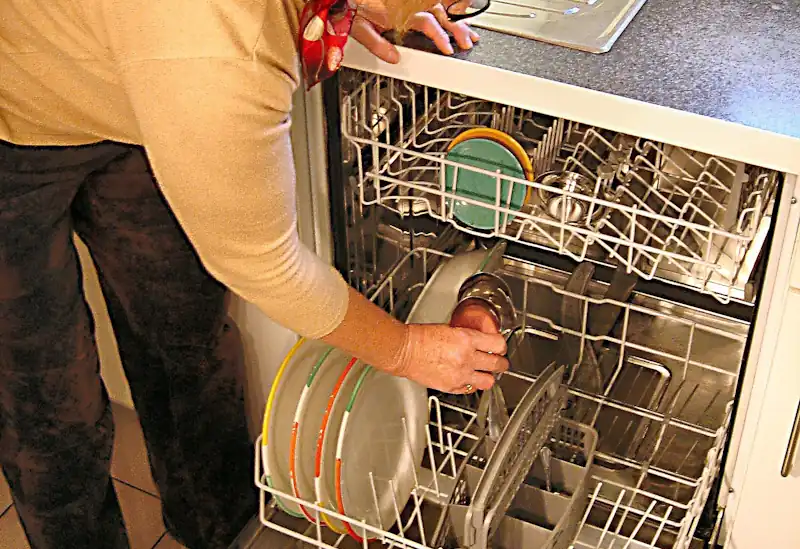
Nobody sits down at the end of a busy Saturday and thinks: that was worth £180 today. But if you add up what the cleaning, cooking, laundry, shopping, and general admin actually took, and price it at what you would pay someone else to do the same things, that is not an unusual number for a household with a couple of adults and a few kids.
Unpaid household work is one of the most undervalued things people do. It is real work, it takes real time, and it has a genuine market price, you just never see it on a payslip. This calculator puts a number on it. Toggle on the chores you do, enter how many hours each takes you per week, and it shows you the annual replacement value of what you are already doing.
There is even a separate section for the invisible mental load, the planning, scheduling, and coordination work that does not show up in hours but takes up real mental energy. If you want to see how the split looks between you and a partner, that is built in too.
There is no agenda here. This is not about making anyone feel guilty, or suggesting the current arrangement is wrong. It is about making something visible that usually stays invisible, and once you can see it clearly, you can decide what, if anything, you want to do with that information.

Who Is This Calculator For?
It is for anyone who runs a household and has never quite seen the full picture of what that involves. More specifically:
- People who feel like they are constantly busy at home but cannot point to why, the ones who finish a weekend and genuinely cannot account for where the time went, because cleaning and laundry and food prep and sorting the kids do not feel like “things” even though they add up to a real number of hours.
- Couples or households where one person does more of the domestic work and wants a clearer view of what that actually looks like when measured rather than estimated. The chore split feature shows the hours and replacement value for each adult separately, which is often the number that makes the conversation happen.
- Stay-at-home parents or carers who are sometimes made to feel as though they are not working, and who would benefit from seeing, in plain numbers, what their week is actually worth.
- Anyone thinking about outsourcing part of their household workload, whether that is a regular cleaner, a meal kit service, or anything else, and wanting to see whether the cost makes sense against the time it returns.
- People returning to or entering full-time employment who need to think honestly about what currently gets done at home, who does it, and what changes when working hours increase.
How to Use the Household Chore Cost Calculator
The calculator has three main sections before it shows you results.
Start with your household profile: choose your living situation (alone, with a partner, with a partner and children, or a shared house), how many children you have, and your work schedule. These three inputs shape some of the contextual outputs at the bottom, particularly the time poverty section, which only appears when your combined work and chore hours suggest limited free time.
The chore section lists fourteen categories: cleaning and tidying, laundry, ironing, cooking and meal prep, washing up, grocery shopping, childcare and baby care, school runs and activities, homework and reading, gardening, pet care, household admin, home maintenance and DIY, and decluttering. Each one starts toggled off. Hit “Add” on any chore you do, and the row expands to show three or four inputs: hours per week, who does most of it (mostly you, shared fairly, mostly your partner, or both equally), the cost to outsource it in pounds per hour, and for some categories an emotional or mental load rating (low, medium, high, or very high). The outsourcing rates are pre-filled with realistic UK defaults for each task, so you can leave them as they are or adjust to match your area.
The mental load section is separate from the chore hours. It covers eight invisible tasks that take up significant mental space without showing up in time: planning meals, managing the family schedule, remembering birthdays and organising gifts, booking and tracking appointments, noticing when things run out, tracking school communications, managing household admin and paperwork, and organising the household social calendar. Tick everything you are primarily responsible for. Each one adds an estimated annual value based on the cognitive effort involved.
Results appear as soon as you toggle on the first chore, and update live as you make changes.
Toggle on every chore you do at home. For each one, enter how many hours per week it takes and who does it. The calculator works out what your unpaid household labour would cost to replace, and whether the work is shared fairly.
Your Household
Your Household Chores
Toggle on every chore you are involved in. Set the hours per week, who does the most of it, and the rate to replace it. Defaults are based on typical UK costs, edit them to match your area.
Invisible Mental Load
These are the tasks that do not show up in hours but take up significant mental space. Tick everything that you are primarily responsible for in your household.
Each mental load task adds an estimated annual value based on the cognitive effort involved, separate from the physical hours tracked above.
Toggle on at least one chore above to see what your household work is worth.
How Many Hours of Unpaid Work Does a Household Actually Do?
This is the question most people have a vague sense of but have never pinned down. The honest answer is: more than they think, and much more for some households than others.
A basic two-adult household with no children and no pets might average around 15 to 20 hours per week of combined domestic work: cleaning, cooking, laundry, shopping, admin. That is 780 to 1,040 hours per year. At £15/hr, those numbers sit between £11,700 and £15,600 in replacement value.
Add children and the picture shifts considerably. School runs, homework time, cooking separate meals, packed lunches, reading routines, clubs and activities, medical appointments: childcare and school admin alone can add 10 to 20 hours per week for a family with young kids, sometimes more. Total household hours for a family with two working parents often land somewhere between 35 and 55 hours per week, which at £15/hr translates to between £27,000 and £43,000 a year in replacement value.
None of that feels surprising once you see it laid out. What surprises people is that they had never actually added it up before.
The calculator separates things by category rather than giving you one undifferentiated number, partly because it is more accurate, but mainly because seeing it broken down is more useful. Knowing that cooking takes 7 hours a week while admin takes 1 hour tells you something different from a combined total. It shows you where the weight actually sits, and the chore breakdown bars make that visible at a glance once you have entered your numbers.
What Replacement Rate Should You Use?
This is the input people most often think about, because there is no single right answer, it depends on what you are valuing and how.
The calculator pre-fills each chore with a realistic UK rate for that specific task, which is worth knowing because different types of household work have very different market prices. Gardening sits around £25/hr. Home maintenance and DIY is closer to £30/hr. Cleaning is typically £18/hr. Cooking and childcare tend to sit around £12/hr for basic cover, though regulated childcare pushes considerably higher. Ironing is usually priced per item rather than per hour, which the default reflects.
The most simple approach is to leave the defaults in place. They are based on typical UK outsourcing costs for each task and give a reasonable baseline for most areas. If you are in London or another high-cost area, sliding the rates up by a few pounds per hour will give a more accurate figure. If you are in a lower-cost area, bring them down.
Some people prefer to use their own hourly rate for everything, the idea being that every hour spent on chores is an hour not available for earning. That gives a different kind of number, one that is about opportunity cost rather than replacement cost, and tends to produce a larger annual total. Both framings are valid; they just answer slightly different questions. The calculator supports either approach since you can edit each rate independently.
The Mental Load: What the Hours Do Not Capture
This is the part of the calculator that tends to surprise people most, because it puts a number on something that has historically been very hard to quantify.
The physical chores, cleaning, cooking, laundry, school runs, are visible. They take time, and you can measure that time. The mental load is different. It is the constant background processing: knowing that the dentist appointment needs rebooked, remembering that the school trip form is due on Friday, noticing that the household is nearly out of washing powder, holding the family schedule in your head so that no two things clash. None of that appears in any hours count, but it is genuinely cognitively demanding work, and when it falls predominantly on one person it creates a real and persistent additional burden.
The calculator’s mental load section covers eight of the most common invisible tasks. Tick the ones you are primarily responsible for, and the calculator adds an estimated annual value to your total, separate from your physical chore hours. The combined figure, physical work plus mental load, is shown alongside the physical-only total in the results, so you can see what difference it makes to include it.
For many households, particularly those with children or genuine admin demands, the mental load adds several thousand pounds to the annual total. For the people carrying it, that number often feels like a recognition of something they knew was real but had never seen acknowledged in concrete terms before.
The Chore Split: Seeing Who Does What
This is the feature that tends to produce the most reaction, because it makes something concrete that is usually kept vague.
Most households have some shared understanding of who tends to do what, but rarely has anyone actually sat down and quantified it. For each chore you toggle on, you set who does most of it: mostly you, shared fairly, mostly your partner, or both equally. The calculator uses those selections to work out your percentage of the total household workload and your partner’s percentage, then displays them as a visual bar alongside a written assessment.
The result is not a verdict. It does not tell you what a fair split looks like, because that depends on things the calculator cannot know: who earns more, who works longer hours, who is home more, what the household has agreed between them, individual circumstances that vary a lot. What it does is take the conversation from “I feel like I do more” or “I feel like you never notice what I do” to “here are the actual numbers for this week, laid out clearly.”
Some households find the numbers roughly reflect what they expected. Others find the gap is wider than either person had realised. Either way, having the data is more useful than not having it.
The calculator also flags whether the split represents a real imbalance, a moderate lean, or a broadly balanced arrangement, with a short written description for each. It is designed to be informative rather than inflammatory, but the numbers it surfaces are sometimes the starting point for a conversation that was a long time coming.
Should You Outsource Any of It?
This is a practical question the calculator can help with, though it will not answer it for you because it depends on things that are personal.
The tips section at the bottom of the results adapts to what you have entered. If you have cooking and shopping toggled on, it talks about batch cooking and meal planning. If cleaning is your biggest time cost, it gives a realistic figure for what a fortnightly cleaner costs and what that removes from your week. If the split shows a large imbalance between you and a partner, it suggests a practical approach to having that conversation.
At £18/hr, outsourcing two hours of cleaning per week costs around £1,872 per year. The question is whether 104 freed hours is worth that to you, and that depends entirely on what you would do with those hours and what your own time is worth. For households where both adults work full-time and weekends feel relentlessly compressed, the answer is often yes.
For households where money is tighter, or where the option simply is not available, the calculator’s value is in visibility rather than outsourcing, understanding what the workload actually is so you can make better decisions about it.
There are genuine savings on the things you already need, from home appliance vouchers to grocery discount codes, that can reduce what household running actually costs without changing the time commitment at all.
Frequently Asked Questions
How much is unpaid household work worth in the UK?
It varies by household size, the presence of children or dependents, and the outsourcing rates used. A two-adult household with no children typically generates around £10,000 to £16,000 per year in replacement value at current UK market rates. Families with young children can easily reach £25,000 to £40,000 or more, when childcare and school admin are properly counted alongside the core domestic tasks. The ONS has estimated the UK’s total unpaid household work at around £1.24 trillion per year, the calculator gives you the personal version of that figure.
What counts as household chores for this calculator?
The calculator covers fourteen categories: cleaning and tidying, laundry, ironing, cooking and meal prep, washing up and kitchen work, grocery shopping, childcare and baby care, school runs and activities, homework and reading support, gardening and outdoor work, pet care, household admin and bills, home maintenance and DIY, and decluttering and organising. Toggle on whichever ones apply to your household. If something does not fit neatly into any category, use the closest one and adjust the hours accordingly.
What is the mental load section and should I fill it in?
The mental load section covers eight invisible tasks that take up significant cognitive space without appearing in any hours count: meal planning, managing the household schedule, remembering birthdays and gifts, booking appointments, noticing and restocking supplies, tracking school communications, managing admin and paperwork, and organising the social calendar. You should fill it in if you want an accurate picture of the total value of your contribution, because for many households, particularly those with children, the mental load adds several thousand pounds to the annual total. If you tick none of them, the physical chore value alone is still a useful figure.
What replacement rate should I use if I am unsure?
Leave the defaults in place. Each chore is pre-filled with a realistic UK market rate for that specific task: £25/hr for gardening, £30/hr for home maintenance, £18/hr for cleaning, £12/hr for cooking and childcare. These are based on typical outsourcing costs and give a reasonable baseline for most areas. Adjust upward for London and high-cost areas, downward if your local rates are lower. You can edit each chore’s rate independently.
Is this calculator only useful for couples?
No. Single-adult households can still use it to see the total value of what they do and understand where the most time costs lie. The “who does most of it” dropdown and the inequality section only become relevant for households with a partner, but the core outputs: annual hours, annual replacement value, mental load total, time poverty alert, are equally useful for anyone.
What is a realistic weekly chore total for different household types?
A rough guide, though individual households vary greatly: a single adult in a smaller home typically does 8 to 14 hours per week. A couple with no children often land between 15 and 22 hours combined. A family with one or two young children is often in the 35 to 55 hour range once childcare is included. A household with an infant or a dependent adult can exceed 60 hours per week of unpaid work. The calculator does not impose these ranges, just toggle on your actual chores and let the numbers reflect your reality.
Does the calculator save my data?
No. All inputs are local to your browser session and nothing is stored or transmitted anywhere. If you leave the page, the chores reset to their defaults. You can screenshot the results if you want to keep them.
Who built this calculator?
The Savzz Household Chore Cost Calculator was made by the team at Savzz.co.uk, a UK discount and money-saving site. We built it because unpaid household labour is one of the most consistently undervalued things people do, and we wanted to give people a clean, honest way to see what it is actually worth, without a subscription, a sign-up, or a hidden agenda.
Final Thoughts
Household work is one of those things most people do every week without ever stopping to measure it. Each individual task is ordinary: a load of laundry, dinner, a school run, a bathroom clean. None of them feel like a big deal on their own. Added together over a year, they are often worth the equivalent of a part-time or full-time salary, done entirely without pay and largely without acknowledgement.
Seeing that number does different things for different people. For some it is validating, confirmation that the relentless feeling of never quite being done is not imaginary, because the workload genuinely is substantial. For others it opens a conversation that has been circling around the edges of a household for years without quite landing. For some it simply changes how they think about their own time on a Tuesday evening when they have been at work all day and still have a kitchen to sort.
Whatever it does for you, the number is more useful than not having it.
If you want to make the cost of running a household a bit more manageable, there are deals across home and garden, cooking and baking, and home appliances on Savzz that are worth a look before the next big purchase.