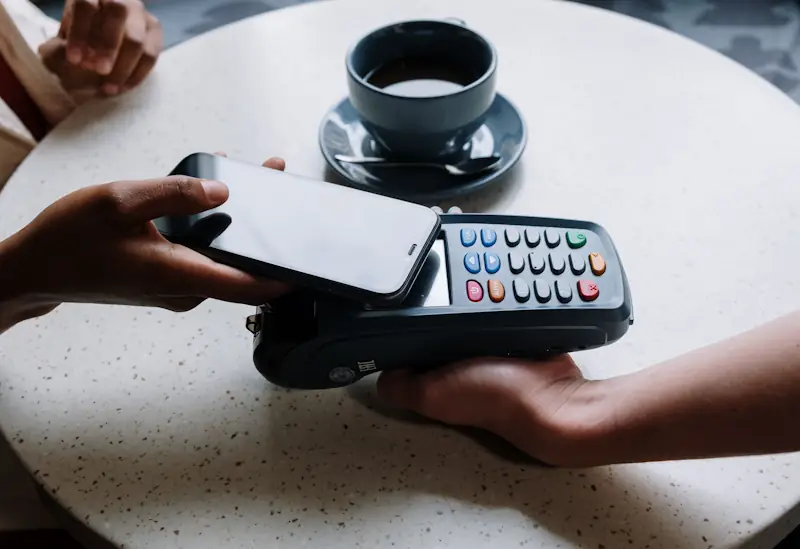
It is a Sunday night and you are going through the bank app before bed, the way you do when you want to feel a bit more in control of things. Nothing on the statement looks wrong. A streaming service here, a coffee there, a takeaway on Friday because it had been a long week, a couple of vape refills, a round bought at the pub because it was your turn. Every single line makes sense on its own. Not one of them looks like the reason your balance is lower than you expected. And yet, somehow, it is.
This is how everyday spending actually works. It rarely arrives as one clear decision. It arrives as dozens of small ones spread across a month, each one reasonable in the moment, none of them ever weighed against the others. Subscriptions renew quietly in the background. A coffee on the way to work becomes so automatic it stops registering as a purchase at all. A takeaway after a hard day feels earned rather than costed. Vaping and drinking both slot into routine and socialising in a way that makes the running total almost impossible to track in your head. None of these habits feel like spending. They feel like ordinary life, right up until you add them all together.
That is exactly the problem. Ordinary life, added up across a full year, is often far more expensive than anyone assumes. Savzz built five free calculators to close that gap, each one taking a habit that feels too small to think about and turning it into a real, honest annual figure based on your own patterns rather than a rough guess.
Here are the five everyday spending tools covered in this guide:
- Subscription Creep Calculator
- Coffee Spending Calculator
- Takeaway Spending Calculator
- Vaping Cost Calculator
- Alcohol Spending Calculator

Subscription Creep Calculator
The Subscription Creep Calculator adds up every recurring payment leaving your account each month, streaming services, apps, memberships, subscription boxes and anything else billed automatically. Subscriptions are built to be easy to start and easy to forget, which means most UK households are paying for at least one service they barely use, sometimes several without realising it.
Key Insights
- Your full combined monthly and annual subscription total in one place
- Which subscriptions you use regularly and which have quietly gone stale
- How much unused or rarely used subscriptions cost you across a year
- Where overlapping services are covering the same need twice
- How your subscription total compares to typical UK household spending in this category
Why It Helps You Save Money
Subscriptions are one of the fastest categories to fix once you can see them listed together in one place. Most people find at least one service worth cancelling as soon as the full list is in front of them, because it is much easier to spot waste in a complete picture than in a scattered set of bank notifications spread across the month. This calculator turns that scattered picture into one clear total, making it easier to keep only what you genuinely use and value.
Once your subscriptions are sorted, the other calculators in this guide can help you look at the rest of your everyday spending too.
Coffee Spending Calculator
The Coffee Spending Calculator works out what your daily coffee habit actually costs across a full year, including the extras that quietly push the number up. It covers the base price of your usual order, add-ons like syrup and alternative milk, weekend coffees, and the behavioural patterns that lead to a second cup on a bad day. Coffee is one of the easiest categories to lose track of, because each individual purchase feels too small to matter.
Key Insights
- How much your specific order, including add-ons, actually costs across a full year
- What a home coffee setup would cost by comparison, using your own numbers
- How much of your habit is driven by routine or stress rather than genuine enjoyment
- The hidden time cost of queueing, and what that time is worth
- Whether a loyalty card or subscription actually suits how you order
Why It Helps You Save Money
Once you can see the annual figure broken into its parts, base cost, add-ons and behavioural extras, it becomes far easier to decide where to make a change. Some people find that switching just one of their two daily coffees to a home-made version saves close to £1,000 a year. Others realise their loyalty card does not match how often they actually visit. The calculator does not tell you to give coffee up, it gives you the real number so any change you make is based on fact rather than a guess.
If you want to see how your coffee spending compares to the rest of your everyday habits, it is worth working through the other calculators in this guide too.
Takeaway Spending Calculator
The Takeaway Spending Calculator looks past the menu price and adds up what your food delivery habit actually costs once platform service charges, delivery fees, impulse sides and the small top-up bought to hit a free delivery threshold are all included. Most people think of a takeaway in terms of the meal itself. The real cost is usually higher once every fee attached to the order is counted too.
Key Insights
- The true annual cost of your takeaway habit, fees included, not just the menu price
- How much delivery platforms add on through service charges and delivery fees
- Whether impulse sides and extras at checkout are quietly inflating your average order
- How your ordering habits compare cuisine by cuisine and platform by platform
- What a typical week of takeaways adds up to once the year is taken as a whole
Why It Helps You Save Money
Delivery fees and service charges are designed to feel small at the point of checkout, a pound here, a couple of pounds there, easy to accept in the moment because the alternative is cooking after a long day. Seen individually, none of these charges register. Added up across a year, they are usually one of the larger and more avoidable parts of a household’s everyday spending. This calculator makes that total visible, so you can decide which takeaways are genuinely worth it and where a top-up threshold or a delivery fee has been quietly adding cost you never agreed to.
Once you know your takeaway total, the other calculators in this guide are worth checking too for the fuller picture.
Vaping Cost Calculator
The Vaping Cost Calculator adds up what a vaping habit actually costs across a full year, covering devices, pods, refills and the ongoing cost of disposables if that is your usual setup. It also compares what switching from disposables to a refillable device would save, alongside the environmental cost of the devices thrown away along the way.
Key Insights
- The full annual cost of your vaping habit based on your own usage
- How much switching from disposables to a refillable setup could save you
- The number of disposable devices thrown away across a year at your current rate
- How your weekly spend compares to what people typically assume they spend
- Where support is available if you want to reduce or stop vaping altogether
Why It Helps You Save Money
Most people who vape regularly have a rough weekly figure in their head and have never added it up properly across a year. Doing that once, honestly, tends to be the moment the habit stops feeling like small change and starts looking like a real household cost. For anyone considering a change, whether that is switching setups or cutting down, this calculator gives an honest starting figure to work from rather than a guess. If you want support to reduce or stop vaping, free confidential help is available from the NHS and through your local stop smoking service.
For a wider look at your everyday spending, the other calculators in this guide are worth exploring as well.
UK Alcohol Spending Calculator
The UK Alcohol Spending Calculator takes an honest look at one of the most consistently underestimated household expenses in the UK and puts a real annual number on it. It covers home drinking, pub and bar spend, rounds bought for others, taxis home and late night food, adding up the full picture rather than just the price of the drinks themselves.
Key Insights
- Your full annual alcohol spend, covering both home drinking and nights out
- How much rounds, taxis and late night food add on top of the drinks themselves
- How your spending compares to typical UK adult drinking costs
- Where the gap sits between a single night’s cost and what a full year adds up to
- Which parts of a night out tend to add the most unplanned cost
Why It Helps You Save Money
Most people have a rough sense of what one night out costs. Almost nobody adds that up across every week of the year, including the rounds bought for others, the taxi home and the food ordered afterwards. This calculator does that addition for you, and the total is usually higher than expected. Seeing the honest figure does not mean giving anything up, it simply means any decision about drinking less or spending differently on nights out is based on a real number rather than a guess.
To see how your alcohol spending fits alongside the rest of your everyday habits, the other calculators in this guide are worth a look too.
Why Everyday Habits Rarely Feel Like Spending
Every habit covered in this guide shares the same basic shape. Each individual purchase is small enough to feel harmless, and none of them are ever weighed up against a full year of the same behaviour. Nobody sits down and consciously decides to spend £900 on coffee or £1,000 on takeaways in a year. Instead, that number builds up through dozens of separate moments, each one reasonable on its own, none of them ever added together in anyone’s head.
Stress and routine both play a large part in this. A takeaway after a hard day, a vape reached for out of habit, or a round bought because it is your turn all work in the moment. They genuinely can lift a bad day or make a social evening easier. The trouble starts when the habit becomes automatic rather than a choice, repeated so often that nobody checks how much it costs across a year rather than in any single moment.
Convenience adds another layer. A coffee bought on the way to work because making one at home felt like too much effort, or a takeaway ordered because cooking felt impossible after a long shift, are both understandable decisions under time pressure. Sometimes they are the right call. The pattern only becomes expensive when convenience becomes the default setting rather than an occasional choice, and when the small premium attached to each easy option is never added up across the weeks and months it happens.
Social pressure shapes a good deal of everyday spending too. Buying a round because everyone else is, keeping a subscription because it comes up in conversation, or ordering a takeaway because a friend suggested it are all decisions shaped by other people rather than a personal want. None of these are unreasonable in isolation. They only become worth examining once you can see how often they happen and what they cost over time.
This is exactly why subscriptions, coffee, takeaways, vaping and alcohol are so easy to underestimate. Each one is billed or paid for in small, repeated amounts rather than one large sum, and the human brain simply does not treat small repeated numbers with the same caution as it treats a single big one. A one-off £900 payment gets scrutinised. A £4 coffee bought most days does not, even though the two figures can end up roughly equal across a year. Daily and weekly habits slip under the radar precisely because they never appear as one number. They only ever show up as a long series of small ones.
The result is that most people manage these five areas of spending using a rough guess rather than a real figure, and rough guesses are almost always lower than reality. This is exactly why these five calculators exist. Each one takes a category of spending that normally hides inside dozens of small transactions and turns it into one honest annual total, so the choice about what to do next can be made with real information rather than a hunch.
Practical Ways to Reduce Everyday Spending
- Get your real numbers first. Before changing anything, work through the calculator for the habit you suspect is costing you the most. Guessing at a figure and knowing the actual figure lead to very different decisions.
- Review subscriptions on a set date. Pick one day every three months to look through everything billed automatically. Cancel anything you have not used since the last check.
- Add friction to impulse purchases. Remove saved card details from apps you browse casually, or add items to a wishlist instead of buying immediately. A short pause is often enough to tell the difference between a genuine want and a passing one.
- Prepare for your usual triggers. If a stressful day usually ends in a takeaway or an extra vape refill, having an alternative ready in advance makes it easier to break the pattern without feeling like you are missing out.
- Track your coffee pattern for a week. Simply noticing how many coffees you buy and when often changes the habit on its own, before any calculator is even needed.
- Set a limit on takeaway extras. Deciding in advance not to add sides or hit a free delivery threshold with extra food keeps the order closer to what you actually intended to spend.
- Set a rough number for a night out before you go. Knowing a loose figure in advance, including rounds and the way home, makes it easier to notice when a night is running well past what you planned.
- Use Savzz discount codes for anything you decide to keep. Once you know which habits are worth holding on to, checking for a working discount code before you pay is a simple way to reduce the cost of the spending you have chosen to keep.
Final Thoughts
Everyday habits rarely feel like a spending category, which is exactly what makes them worth a proper look. Subscriptions, coffee, takeaways, vaping and alcohol all operate the same way. Each individual purchase is too small to think twice about, and the real cost only becomes clear once a full year of the same behaviour is added together.
Working through all five calculators gives you the fullest possible picture of where your everyday money goes. Some habits will turn out to be exactly as cheap as you assumed. Others will be higher than expected, and that is genuinely useful to know, not as a reason to feel bad about how you spend, but as the starting point for deciding whether your current pattern actually matches what you want your money to be doing.
Small daily decisions rarely feel important in the moment. Across a full year, they are often the single biggest factor in a household budget, bigger than the occasional large purchase that gets all the attention and second-guessing. Taking twenty minutes to work through these five calculators is a straightforward way to see your own patterns clearly, and to make any changes based on real numbers rather than a guess.